Clamping and standoff — what the voltage ratings mean for your protection circuit
The 1.5SMC9.1CAHM3_A/I: The 7.78 V reverse standoff (VRWM) is the maximum voltage the TVS sees during normal circuit operation — above it the device begins to conduct. The 8.65 V minimum breakdown is where conduction definitively starts under the test condition.
Automotive temperature grade and AEC-Q101 qualification
Rated junction temperature spans -65 to +150 °C — the upper bound covers engine-bay and transmission-adjacent deployments where local ambient can reach 125 °C and the junction still holds margin. AEC-Q101 qualification means the part passed humidity, temperature cycling, and surge-life stress testing to the automotive electronics reliability standard — the series carries both automotive and telecom application flags, so the thermal cycling and peak pulse endurance are characterised for field environments beyond a benign-office rating.
Package, mounting, and sourcing posture
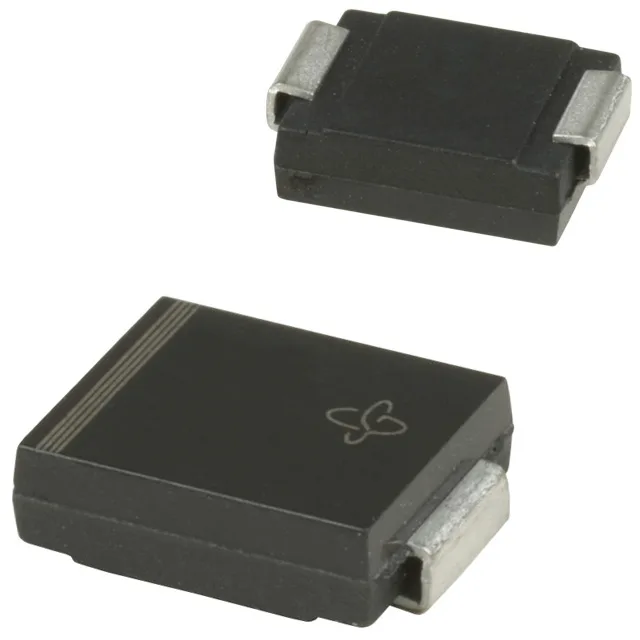
The DO-214AB (SMC) package is the mid-size TVS footprint — the cathode tab carries the heat from the clamping event, so the land pattern and solder joint quality on the tab directly affect the thermal impedance the device sees during a real transient. Tape-and-reel packaging is standard for high-volume SMT assembly.