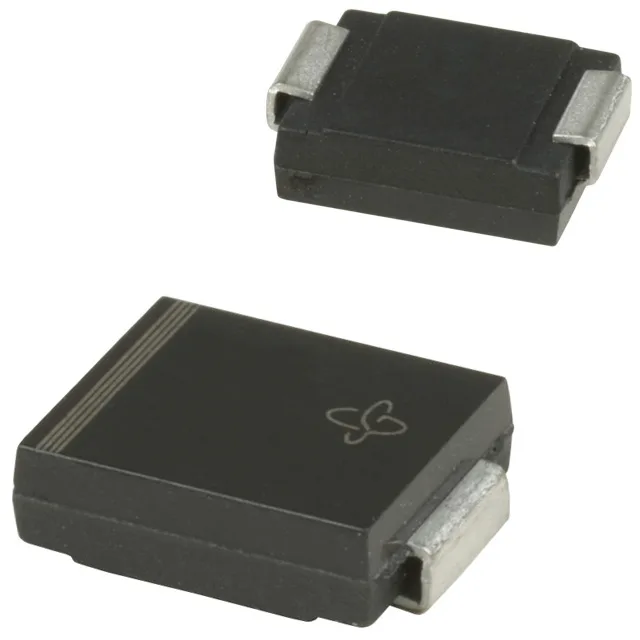
Vishay General Semiconductor - Diodes Division 1.5SMC82CAHM3/H — Circuit Protection

Vishay 1.5SMC82CAHM3/H TVS Diode, 1.5kW, 113V Clamping

MPN1.5SMC82CAHM3/H
Active

Vishay General Semiconductor - Diodes Division, 1.5SMC82CAHM3/H, Zener bidirectional TVS diode, AEC-Q101, 1.5 kW peak pulse, 113V clamping @ 13.3A, 70.1V standoff, DO-214AB SMC, -65°C~150°C junction, surface mount, Tape & Reel.

Independent supplier — new & surplus stockAuthenticity-screened · ESD-safe packingListing updated Aug 2026

Specifications

1.5SMC82CAHM3/H specifications
ParameterValue
TypeZener
SeriesAutomotive, AEC-Q101, 1.5SMC, TransZorb®
MountingSurface Mount
Voltage - breakdown77.9V
Voltage - clamping (Max) @ ipp113V
Voltage - reverse standoff70.1V
Current - peak pulse (10/1000μs)13.3A
Power - peak pulse1500W (1.5kW)
Power line protectionNo
Operating temperature-65°C~150°C(TJ)
PackageTape & Reel (TR)
ApplicationsAutomotive, Telecom
CaseDO-214AB, SMC
Bidirectional channels1

Product details

What the clamping rating means for the protection circuit

The 1.5SMC82CAHM3/H: That number governs the clamper's position in the protection chain: it sits after the series impedance that limits the current, not as the first element. DO-214AB (SMC) surface-mount body accepts standard reflow profiles — the anode tab is the thermal tie to the board copper; check the pad footprint drawing against the land pattern to avoid a cold joint at that tab.

Why the AEC-Q101 grade matters in automotive deployments

The AEC-Q101 qualification means the part passed the automotive council stress tests for discrete semiconductors — temperature cycling, humidity, and surge exposure — giving design engineers the qualification packet they need for safety-critical or under-hood modules. Listed applications are automotive and telecom — both environments where a clamping diode sees line-surge and inductive kick events, not continuous power operation.

Frequently asked questions

What is the difference between a TransZorb and a standard Zener TVS?

The TransZorb is Vishay's original name for the avalanche-mode TVS diode — it clamps transients through avalanche breakdown rather than zener conduction, which allows it to absorb high-energy pulses without the gradual degradation seen in a plain zener stressed beyond its power rating.