What the 1.5 kW clamping spec means for the protected rail
The 1.5SMC82AHM3_A/H: At 13.3 A peak pulse current the clamping node sits at 113 V maximum — the downstream semiconductor sees 113 V, not whatever the surge amplitude was. The reverse standoff of 70.1 V typical is the working voltage the protected line sits at in normal operation — the TVS stays off until a transient pushes the rail above that level. The minimum breakdown of 77.9 V gives a small guard band so the device does not turn on during normal supply variation.
Automotive qualification and where it runs
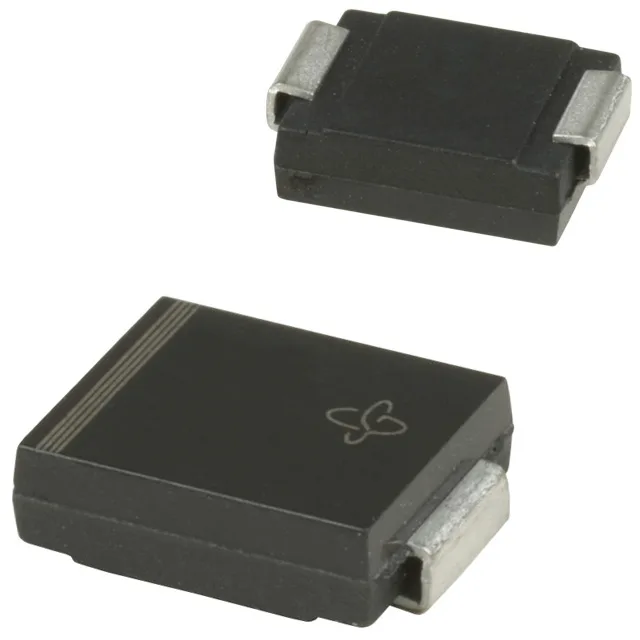
AEC-Q101 grade puts this in the automotive reliability basket — the qualification covers temperature cycling, humidity bias, and surge life per the AEC stress test standard. Operating junction temperature runs to 150 °C, so a summer engine bay at 105 °C still leaves thermal margin. The primary applications are Automotive and Telecom — the telecom rating reflects the same surge-withstand logic for base-station power rails. The DO-214AB (SMC) package is the mid-size TVS footprint — larger than a SMA, smaller than a SMC (which is the same physical package but different pinout convention). Surface-mount reflow attach is standard; tape-and-reel packaging supports high-volume assembly lines.
The base product number 1.5SMC82 maps to the wider 1.5SMC family; if you are cross-shopping within that series for a different standoff voltage, the sibling matrix shares the same package and footprint. Confirm the standoff and clamping ratings against your transient specification before committing — the series covers a wide voltage range and a wrong voltage grade will not protect the load.