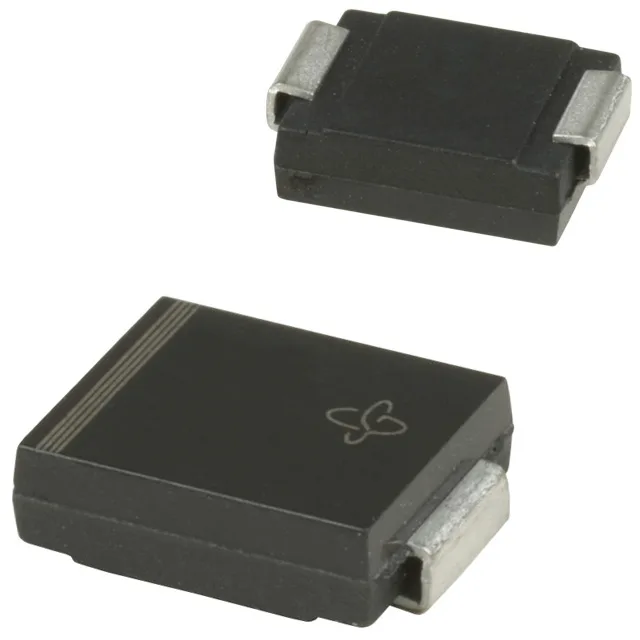
The 1.5SMC8.2CAHM3_A/H: That waveform is the automotive test standard: a slower, higher-energy surge than the 8/20 µs industrial transient, meaning this part is sized for the load-dump and reverse-battery pulses an ECU experiences on the 12 V rail, not for telecom or datacom line-card protection. Peak pulse current is 124 A at 10/1000 µs — the clamping voltage at that current sits at 12.1 V maximum. Working backward, the minimum breakdown is 7.79 V, so the standoff is a nominal 7.02 V. On a 5 V rail the VRWM gives adequate headroom; on a 6 V rail the breakdown minimum still keeps leakage low until a transient fires the clamp.
150 °C junction temperature and AEC-Q101 grade
Junction temperature range is -65 to 150 °C — the upper limit matches the AEC-Q101 Grade 1 ceiling, so the thermal margin in a under-hood ECU that sees 125 °C ambient at the board is thin at best. Bench characterization should include a thermal sweep at max TJ before sign-off. The bidirectional single-channel configuration protects both polarities on the same node without requiring two separate unidirectional devices — a footprint saving that matters in space-constrained BCM or ADAS module layouts.
Sourcing posture — active, no stated successor
Confirm current pricing and lead time against your program build plan before committing — the part is sourced from the market, not held in shelf inventory here.