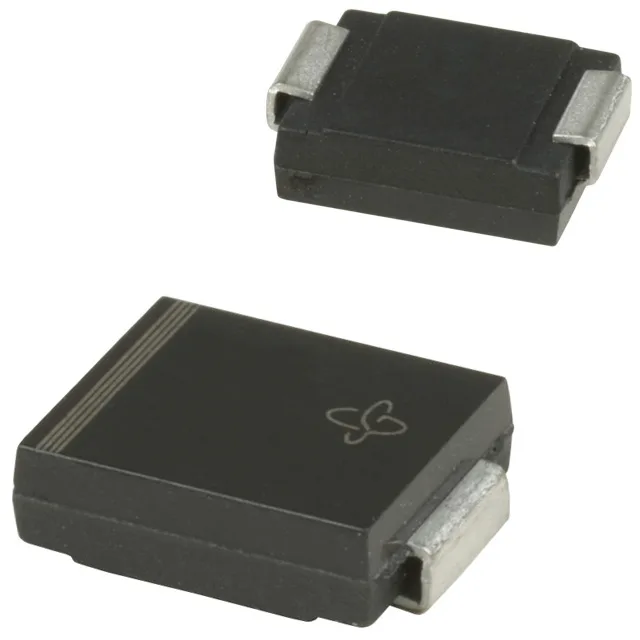
The 1.5SMC75CA-M3/57T: That shape matches the lightning-surge and inductive-kick transient profile in most industrial and supply-line environments, so a part rated at this waveform handles the actual threat without derating. At the clamping voltage of 104 V with a 14.6 A peak pulse current, the device clamps the overvoltage spike and dissipates the surge energy as heat internally — the downstream IC or regulator sees the clamped level, not the raw transient. For a 64.1 V rail this 1.5 kW part sits between the working voltage and the catastrophic-overvoltage threshold with enough margin for typical IEC 61000-4-5 surge testing.
The TVS operating window — standoff, breakdown, clamping
The reverse standoff of 64.1 V is the maximum working voltage where the TVS stays off and draws only leakage current in normal operation — it sits above the nominal rail, so normal 48 or 60 V supply lines are undisturbed. At 71.3 V the Zener junction breaks down and the TVS begins conducting, clamping the voltage for the downstream circuit. The 104 V clamping ceiling at rated peak current is the voltage the protected load actually sees during a surge event — the difference between that ceiling and the breakdown threshold is the TVS's let-through margin.
SMC/DO-214AB package and the TransZorb series
The 1.5SMC series carries the TransZorb® brand, Vishay's original trademark for their Zener-based TVS construction — this architecture gives lower clamping voltage versus a MOV of equivalent peak rating, at the cost of tighter energy handling per event.