What the 11.3V clamping and 133A peak pulse mean for transient protection
The 1.5SMC7.5CAHM3/I: The 1.5kW peak pulse rating is the surge energy the device can survive once in the 10/1000µs event window, which is the standard automotive surge shape. A TVS that clamps harder (lower clamping voltage) limits the overvoltage stress on the protected node more aggressively; 11.3V at the board rail is the clamping ceiling for a line that runs at or near the nominal 5V or 12V rail in telecom or automotive edge nodes. The 6.4V reverse standoff voltage is the working voltage below which the TVS conducts no current — the line can sit at 6.4V continuously without the device drawing leakage. This gap between 6.4V standoff and 7.13V minimum breakdown (where conduction begins) gives the protected rail a clean margin under normal operation.
AEC-Q101 qualification and the CA bidirectional suffix
The CA in the order code confirms the device is bidirectional — it clamps both polarities of transient voltage, which is the required configuration for many automotive and telecom supply rails where the signal ground reference is shared and both positive and negative transients can appear on the line. The HM3/I suffix marks this as automotive-grade with the internal construction and screening flow to match. The 1.5SMC series carries the TransZorb® legacy — Vishay's proprietary junction design that provides controlled avalanche characteristics during transient events, differentiating it from a plain Zener that is not characterised for avalanche operation under surge conditions.
DO-214AB SMC footprint and telecom/automotive deployment
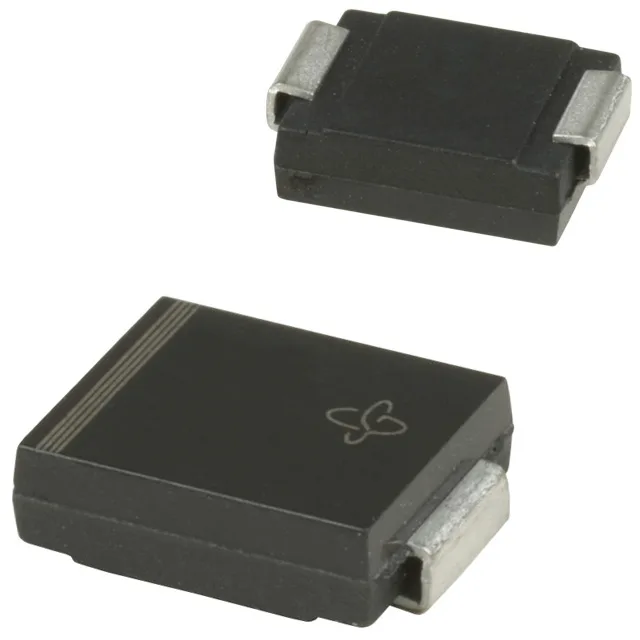
The DO-214AB (SMC) package is the mid-size SMA-family footprint — larger than the SMB (DO-214AA) and smaller than the SMC radial-lead variant. The cathode bar marks polarity on the sleeve. It solders with a standard IR or wave profile and the thermal pad under the body ties to the PCB copper for transient heat dissipation during a surge event — the clamping performance is rated with the recommended pad size, so verify the land pattern matches the datasheet layout if the board sees repeated surge events.