Clamping ceiling and peak pulse rating
The 1.5SMC7.5CA-M3/57T: The 11.3 V clamping voltage at 133 A peak pulse (10/1000 µs waveform) sets the let-through ceiling — any transient that exceeds 6.4 V standoff gets clamped to 11.3 V before it reaches the rail, so downstream components see 11.3 V as their maximum stress, not the raw surge voltage. At 1.5 kW peak pulse the device absorbs the energy of a fast transient without degradation — the 150 °C junction temperature rating gives headroom during repeated clamping events, so a board that sees occasional inductive kick or ESD has thermal margin built into the spec rather than requiring a derate on first event.
What the standoff and breakdown voltages mean for rail protection
The 6.4 V reverse standoff is the working rail the diode monitors — it sits reverse-biased below that voltage and conducts only when a transient pushes the rail above it. The 7.13 V minimum breakdown ensures the clamping action activates above the nominal rail plus reasonable tolerance — a 5 V or 5.2 V rail has plenty of margin to the 7.13 V floor, so normal operation at 6.4 V standoff stays clean without leakage false-triggering.
SMC package and sourcing context
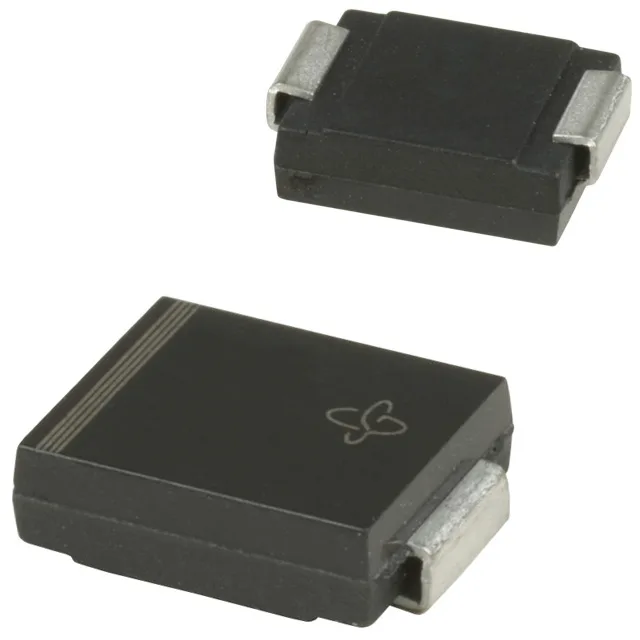
The DO-214AB (SMCJ) package is the standard foot for this series — any pin-compatible 1.5SMC CA-variant in the same case size drops in, which matters when you are chasing spot market availability on a fast-turn build.