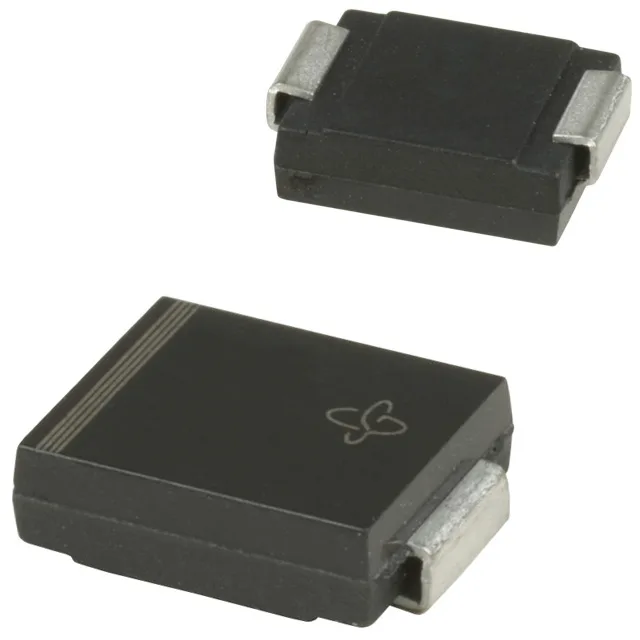
Vishay General Semiconductor - Diodes Division 1.5SMC68CAHM3/I — Circuit Protection

Vishay 1.5SMC68CAHM3/I TVS Zener Diode, 92 V Clamping

MPN1.5SMC68CAHM3/I
Active

Vishay General Semiconductor - Diodes Division 1.5SMC68CAHM3/I TVS Zener, automotive grade, AEC-Q101, 1500 W peak pulse, 92 V clamping @ 16.3 A, bidirectional single-channel, DO-214AB SMC, surface mount, Tape & Reel.

Sourced new & surplus through independent channelsAuthenticity-screened · ESD-safe packingListing updated Aug 2026

Specifications

1.5SMC68CAHM3/I specifications
ParameterValue
TypeZener
Series1.5SMC, TransZorb®
MountingSurface Mount
Voltage - breakdown64.6V
Voltage - clamping (Max) @ ipp92V
Voltage - reverse standoff58.1V
Current - peak pulse (10/1000μs)16.3A
Power - peak pulse1500W (1.5kW)
Power line protectionNo
Operating temperature-65°C ~ 150°C (TJ)
GradeAutomotive
PackageTape & Reel (TR)
ApplicationsTelecom
QualificationAEC-Q101
CaseDO-214AB, SMC
Bidirectional channels1

Product details

1.5 kW peak-pulse TVS Zener in DO-214AB SMC

The 1.5SMC68CAHM3/I is a bidirectional single-channel Transient Voltage Suppressor — a TransZorb®-type Zener — in the DO-214AB (SMC) surface-mount package. Bidirectional clamping means it suppresses both polarities of transient surge without requiring separate polarity-aware layout; a single device on a line protects against positive spikes and negative transients alike. Rated 1500 W peak pulse (10/1000 µs waveform), the 1.5SMC series is qualified to AEC-Q101, placing it in the automotive electronics stress-grade tier. Operating junction temperature runs to 150 °C, and the Tj range of -65 °C to 150 °C covers both cold-start and engine-bay ambient profiles.

Clamping ceiling and standoff: the three ratings that govern protection design

Reverse standoff voltage is 58.1 V typ — the working voltage below which the TVS presents high impedance and draws only leakage current. The part stays dormant in normal operation at this rail. Breakdown triggers at a minimum of 64.6 V, defining the threshold where conduction begins. For a protected rail, the downstream circuit must survive 92 V let-through for the duration of the surge event. Peak pulse current of 16.3 A (10/1000 µs) tells you the surge shape the part handles before self-heating exceeds the thermal limit. Matching the TVS Ipp rating to the expected surge magnitude in the telecom or automotive environment — lightning impulse, load dump, or inductive kick — is the primary selection gate.

Frequently asked questions

Where can I source 1.5SMC68CAHM3/I and what is the lead time?

Vishay General Semiconductor lists the part as Active, so it draws from the standard production line rather than surplus or broker stock.

What type of protection does 1.5SMC68CAHM3/I provide?

It is a bidirectional single-channel TVS Zener (TransZorb®), designed to clamp voltage transients on a protected rail. The 58.1 V standoff sets the working voltage; once the surge drives the line above 64.6 V minimum breakdown, the device clamps the peak to 92 V at up to 16.3 A peak pulse current.

What does AEC-Q101 qualification mean for 1.5SMC68CAHM3/I?

AEC-Q101 is the automotive stress-grade qualification for discrete semiconductors — it tests the part against temperature cycling, humidity, mechanical shock, andESD levels consistent with the automotive environment. Grade qualification means the device is accepted for use in automotive electronics deployments, though the listed telecom application suggests it also serves high-reliability industrial protection designs.