Clamping and protection ratings
The 1.5SMC68A-M3/9AT: The standoff voltage of 58.1V marks the maximum steady-state working level the protected rail sees in normal operation. The TVS avalanches at a minimum 64.6V across the junction — that gap between 58.1V and 64.6V is the design headroom before the protection element engages. At 1500W peak pulse, the 1.5SMC68A handles the 10/1000µs waveform surge class common in AC power and signal line protection. The unidirectional polarity means it protects a single rail against positive transients — fit it across the supply-to-ground of the circuit you are guarding. For a bipolar or dual-rail board, you would need the bidirectional counterpart.
Package and thermal margins
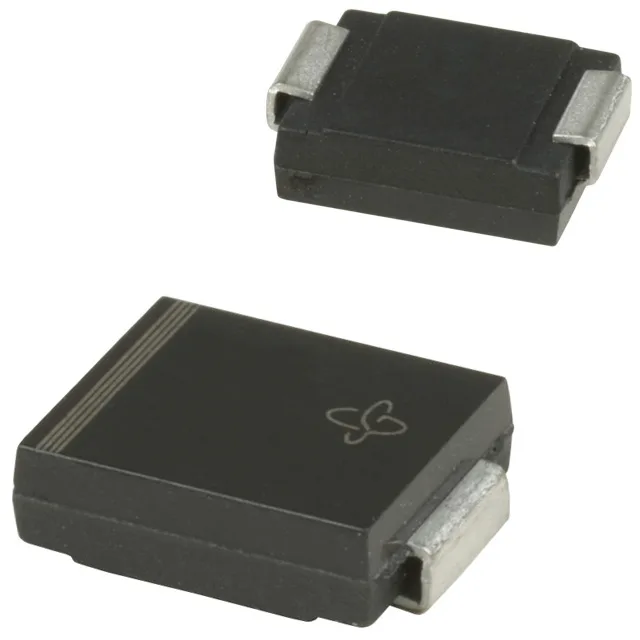
The surface-mount form factor suits automated placement, and tape-and-reel packaging confirms the ordering code variant you want if you are running high-volume pick-and-place. The 150°C maximum junction temperature gives a 50°C margin above the upper operating ambient in most enclosed equipment designs — but in a sealed chassis or near a heat source, verify the thermal resistance from junction to ambient against the expected surge duty cycle before committing to the layout.
Series context and lifecycle
The 1.5SMC series carries the Vishay TransZorb® designation — a glass-passivated junction TVS construction originally introduced for telecom and power-supply transient protection. The base part number 1.5SMC68 places it in the 58.1V standoff family; the A suffix denotes the tight ±5% voltage tolerance band required for consistent clamping threshold.