Transient protection ratings — what the numbers mean
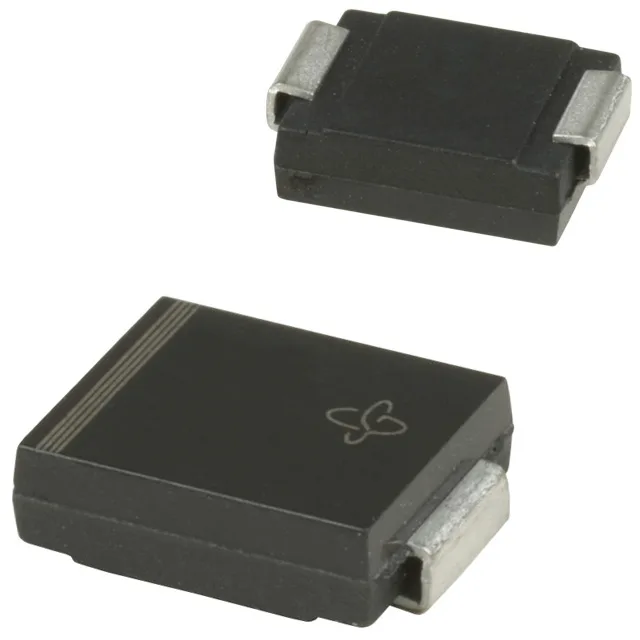
The 1.5SMC62CAHE3/57T: Bidirectional TVS diode, 53 V reverse standoff (typ) — this is the working voltage the protected rail sits below during normal operation, so the diode stays reverse-biased and leakage is negligible until a transient appears. The 58.9 V minimum breakdown marks where it starts conducting; at the rated surge current of 17.6 A peak (10/1000 µs waveform) the clamping voltage is held to 85 V max — the downstream circuitry sees 85 V regardless of how high the surge tries to pull the rail. The CA suffix confirms bidirectional polarity — the diode clamps both positive and negative transients, which matters for automotive node pairs that swing around ground.
Automotive-grade qualification for under-hood deployment
AEC-Q101 qualified with a junction temperature limit of 150 °C — the upper end of the operating window is set by the automotive thermal environment, not a generic commercial derating curve. In a sealed ECU housing that reaches 125 °C ambient, the 150 °C junction rating still leaves margin for self-heating under surge. Surface-mount DO-214AB SMC body mounts directly to the PCB land pattern; no socket, no through-hole lead forming — the board layout controls thermal resistance from junction to ambient.
Active lifecycle — supply and sourcing posture
Listed Active by Vishay General Semiconductor — the 1.5SMC62CA series continues in standard production with Tape & Reel packaging per the listed reel quantity.