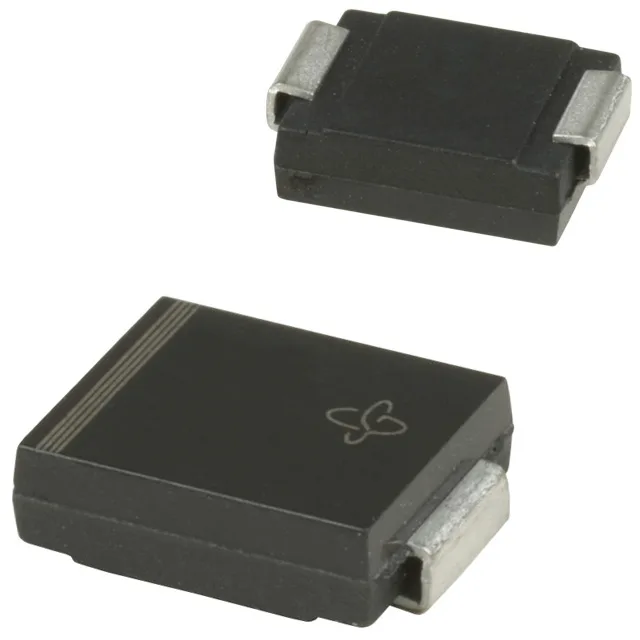
Vishay General Semiconductor - Diodes Division 1.5SMC56CA-M3/9AT — Circuit Protection

Vishay 1.5SMC56CA-M3/9AT TVS Diode, 1500W Peak, 77V Clamp

MPN1.5SMC56CA-M3/9AT
Active

Vishay General Semiconductor Zener bidirectional TVS diode, 1.5SMC/TransZorb series, 1500W peak pulse, 47.8V reverse standoff, 77V clamping max @ 19.5A, DO-214AB SMC surface-mount package, -65 to 150°C junction operating temperature.

Independent supplier — new & surplus stockAuthenticity-screened · ESD-safe packingListing updated Aug 2026

Specifications

1.5SMC56CA-M3/9AT specifications
ParameterValue
TypeZener
Series1.5SMC, TransZorb®
MountingSurface Mount
Voltage - breakdown53.2V
Voltage - clamping (Max) @ ipp77V
Voltage - reverse standoff47.8V
Current - peak pulse (10/1000μs)19.5A
Power - peak pulse1500W (1.5kW)
Power line protectionNo
Operating temperature-65°C~150°C(TJ)
PackageTape & Reel (TR)
ApplicationsGeneral Purpose
CaseDO-214AB, SMC
Bidirectional channels1

Product details

1500W peak pulse — what the rating means on the bench

The 1.5SMC56CA-M3/9AT: That waveform defines the energy the device must absorb without failing. When a transient fires, the clamping stage — rated 77V maximum at 19.5A peak pulse current — pins the voltage at the downstream circuit's input. The 19.5A figure tells you the current the clamping element must survive at the standard waveform; exceeding it risks the device entering secondary breakdown.

Three-voltage selection logic for the protected rail

The reverse standoff voltage of 47.8V is the DC working voltage the TVS sees when the circuit is quiescent — biased in reverse, drawing only leakage current, doing nothing. The 53.2V minimum breakdown is the threshold above which the Zener action begins; the CA bidirectional variant clamps on both polarities around that breakdown point. For a 48V nominal rail, the standoff-to-breakdown margin is tight enough that you size the TVS with headroom above the worst-case DC working voltage — a 52V rail dipping below 47.8V risks unwanted early conduction on a cold start or during brownout.

TransZorb heritage and the DO-214AB package

Operating junction temperature runs to 150°C — the upper end of the -65 to 150°C rating gives you a wide thermal ceiling for automotive and industrial environments where the board ambient can climb. The DO-214AB leads and pad layout must follow the land pattern in the Vishay datasheet; the package sits flat against the PCB plane for thermal transfer.

Active lifecycle — what this means for your BOM schedule

No official second source or cross-reference is listed for this order code — a single-supplier BOM position until an alternate is qualified.

Frequently asked questions

What standoff voltage does the 1.5SMC56CA handle during normal operation?

The reverse standoff (working) voltage is 47.8V typical. The device stays reverse-biased at up to this level without conducting; once a transient exceeds the 53.2V minimum breakdown, the clamping action engages and holds the voltage to a maximum of 77V across the 19.5A peak pulse event.

Is there a pin-compatible alternative in the 1.5SMC series?

The 1.5SMC series spans multiple standoff and clamping voltage combinations; the CA suffix designates the bidirectional polarity and 53.2V minimum breakdown. Any CA-bidirectional DO-214AB part in the family with matching standoff, breakdown, and clamping ratings is the candidate — no formal cross-reference order code is listed for this specific part.