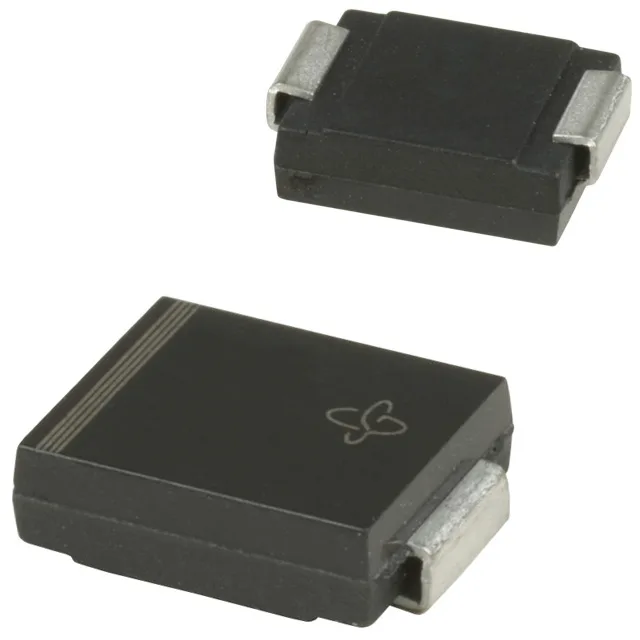
Vishay General Semiconductor - Diodes Division 1.5SMC43CAHE3/57T — Circuit Protection

Vishay 1.5SMC43CAHE3/57T TVS Diode, 36.8V Standoff, 1500W

MPN1.5SMC43CAHE3/57T
Active

Vishay General Semiconductor - Diodes Division, TransZorb® Automotive TVS, 1.5SMC43CAHE3/57T, bidirectional Zener, 36.8V reverse standoff, 59.3V clamp, 1500W peak pulse, DO-214AB (SMC), AEC-Q101.

Independent supplier — new & surplus stockAuthenticity-screened · ESD-safe packingListing updated Aug 2026

Specifications

1.5SMC43CAHE3/57T specifications
ParameterValue
TypeZener
SeriesAutomotive, AEC-Q101, 1.5SMC, TransZorb®
MountingSurface Mount
Voltage - breakdown40.9V
Voltage - clamping (Max) @ ipp59.3V
Voltage - reverse standoff36.8V
Current - peak pulse (10/1000μs)25.3A
Power - peak pulse1500W (1.5kW)
Power line protectionNo
Operating temperature-65°C~150°C(TJ)
PackageTape & Reel (TR)
ApplicationsAutomotive
CaseDO-214AB, SMC
Bidirectional channels1

Product details

Clamping window and peak pulse rating

The 1.5SMC43CAHE3/57T: Rated for 1500 W peak pulse power (1.5 kW) under the standard 10/1000 µs test condition, the device absorbs high-energy transients like load-dump or inductive kickback without failing short.

Automotive qualification and temperature range

AEC-Q101 qualified and intended for automotive applications, this TVS is screened for the reliability stresses typical of under-hood and chassis-mounted electronics — temperature cycling, high-temperature reverse bias, and ESD robustness per the automotive grade standard.

Supplied on tape and reel (TR), the 1.5SMC43CAHE3/57T is compatible with standard pick-and-place and reflow soldering profiles. No power line protection feature is claimed — this is a dedicated transient suppressor, not a crowbar or overvoltage protector for continuous DC rails.

Frequently asked questions

What is 1.5SMC43CAHE3/57T's listed type on this Circuit Protection line?

The device type is Zener — a Zener-diode-based transient voltage suppressor that uses avalanche breakdown to clamp overvoltage events. The bidirectional structure is implemented as two back-to-back Zener junctions in a single die.