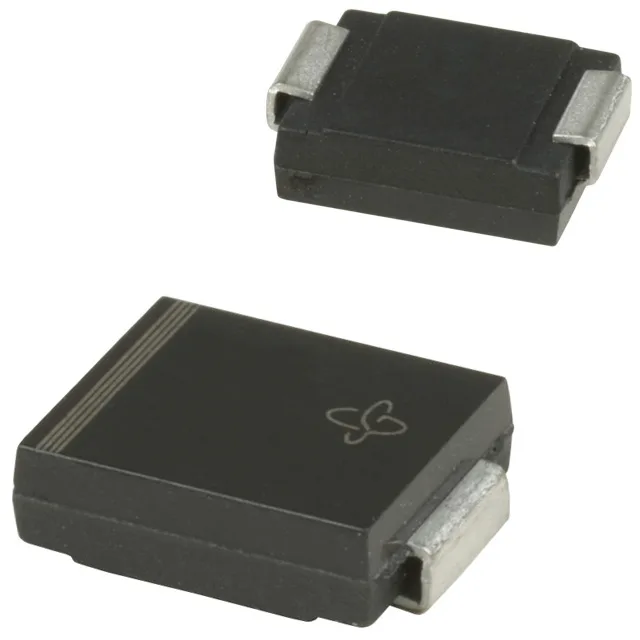
AEC-Q101 qualified — what the grade means for the BOM
The 1.5SMC39CAHM3_A/I: The AEC-Q101 qualification is the hard gate for automotive use: it means the part passed the full reliability stress suite — temperature cycling, HAST, high-temperature reverse bias — under the automotive discrete qualification standard. An industrial TVS with the same electrical ratings does not carry this PPAP-ready pedigree. The operating temperature range of -65°C to 150°C covers the underhood and engine-bay ambient — a commercial-grade 85°C part would derate or fail in the same location. For an ECU designer, this temperature grade plus the AEC-Q101 stamp means the part can be placed directly into a PPAP submission without a qualification waiver.
Clamping voltage and surge current — sizing the protection rail
This clamp ceiling must stay below the downstream IC's absolute-maximum rating — a 60V-rated DC-DC converter has 6.1V of headroom above the clamp, which is tight but workable if the PCB layout keeps the TVS close to the protected node. For a 24V system, this 1.5kW rating means the TVS can absorb a single 27.8A pulse without failing short — but repetitive surges above the derating curve will degrade the junction.
Lifecycle and supply posture
For a BOM cost engineer, this means the part is still in the manufacturer's standard production portfolio and can be specified into new designs without obsolescence risk. Sourced through independent distribution against an RFQ; pricing and lead time confirmed at quote time.