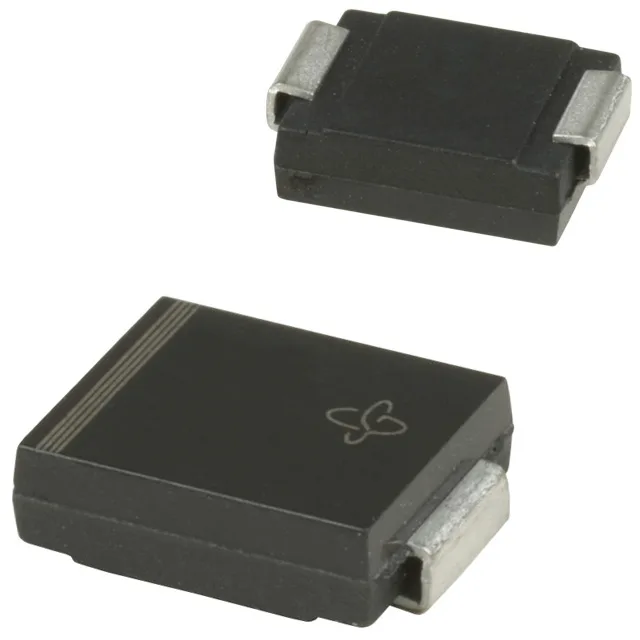
Vishay General Semiconductor - Diodes Division 1.5SMC220CA-M3/57T — Circuit Protection

1.5SMC220CA-M3/57T Vishay 1500W Bidirectional TVS, DO-214AB

MPN1.5SMC220CA-M3/57T
Active

Vishay General Semiconductor 1.5SMC, TransZorb® series, Bidirectional Zener TVS Diode, DO-214AB SMC package, 1500W peak pulse power, 185V reverse standoff, 328V clamping.

Independent supplier — new & surplus stockAuthenticity-screened · ESD-safe packingListing updated Aug 2026

Specifications

1.5SMC220CA-M3/57T specifications
ParameterValue
TypeZener
Series1.5SMC, TransZorb®
MountingSurface Mount
Voltage - breakdown209V
Voltage - clamping (Max) @ ipp328V
Voltage - reverse standoff185V
Current - peak pulse (10/1000μs)4.6A
Power - peak pulse1500W (1.5kW)
Power line protectionNo
Operating temperature-65°C~150°C(TJ)
PackageTape & Reel (TR)
ApplicationsGeneral Purpose
CaseDO-214AB, SMC
Bidirectional channels1

Product details

1500 W bidirectional clamp — the numbers that decide the fit

The 1.5SMC220CA-M3/57T: With a 185 V reverse standoff voltage and a 328 V maximum clamp at 4.6 A peak pulse current, this part protects 185 V nominal rails — common in three-phase rectified DC buses or 120/240 VAC telecom rectifier outputs — by clamping transients before they reach downstream silicon. The 209 V minimum breakdown voltage gives the designer a 24 V window between the rail and the avalanche threshold, enough to ride through normal line ripple without nuisance clamping.

Tape and reel packaging (TR suffix) aligns with high-volume pick-and-place — the reel quantity matches the standard 7-inch or 13-inch reel formats for DO-214AB.

Frequently asked questions

What does the 1500 W peak pulse power rating mean for my circuit?

The 1500 W rating is measured with a 10/1000 µs exponential waveform — the standard telecom surge. For shorter pulses (8/20 µs) the peak power capability is higher; for longer transients it derates. The 328 V clamp at 4.6 A tells you the TVS holds the line voltage below the downstream device's abs-max rating during the surge event.