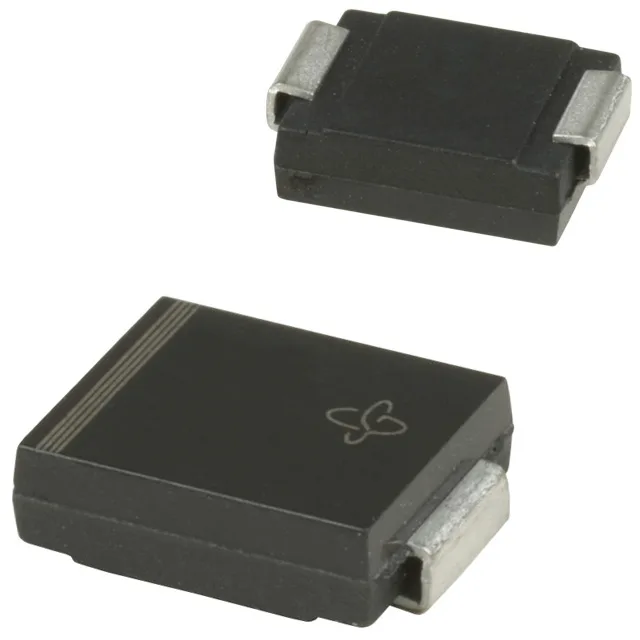
Transient suppressor for 12V/24V automotive buses
The 1.5SMC20CAHM3_A/I: With a 17.1 V reverse standoff voltage and a 27.7 V clamping point at 54.2 A peak pulse current, it sits between a nominal 12 V or 24 V supply rail and the downstream silicon — clamping fast transients before they reach the ECU's power-stage FETs or the CAN transceiver. The breakdown voltage min is 19 V, so the diode stays out of conduction during normal battery voltage swings up to 16 V (load-dump excluded) and only starts shunting above that threshold. That margin is what keeps the quiescent leakage in the microamp range during key-off.
AEC-Q101 qualification and temperature envelope
This part carries AEC-Q101 automotive qualification, meaning it has passed the full suite of stress tests — temperature cycling, high-temperature reverse bias, and ESD robustness — that a Tier-1 requires for under-hood or cabin electronics. The 1500 W rating assumes the PCB copper area specified in Vishay's application note; a smaller pad raises the junction temperature for the same pulse.
Active lifecycle — no last-time-buy pressure
Vishay lists the 1.5SMC20CAHM3_A/I as Active. The TransZorb series has a broad installed base in telecom and automotive transient protection. The A/I suffix indicates the automotive-qualified, RoHS-compliant, halogen-free variant in tape-and-reel packaging — the same silicon in the same package as the commercial-grade sibling, but with the AEC-Q101 screening added.