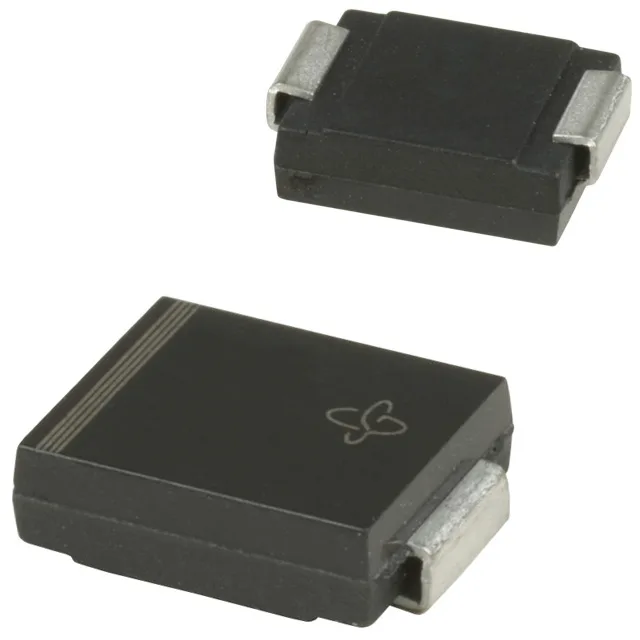
AEC-Q101 qualified transient suppressor for automotive signal buses
The 1.5SMC20CAHM3/H: The -65°C to +150°C junction temperature range covers underhood and cabin electronics with margin.
Voltage thresholds and bidirectional clamping
The 17.1V reverse standoff defines the maximum DC or signal voltage the TVS will not conduct at — a 12V or 24V nominal automotive bus sees no leakage from this part under normal operation. The 19V minimum breakdown ensures the Zener region is entered only when the line exceeds the normal rail tolerance, while the 27.7V clamp at 54.2A limits the peak voltage a downstream IC sees during a load-dump or inductive kickback event. Bidirectional construction (one channel) means this single device protects a differential pair or a signal line that swings both positive and negative relative to ground, without needing back-to-back series diodes.
Package and board-level integration
Housed in the DO-214AB (SMC) surface-mount package — a standard footprint with a large copper pad that conducts heat into the PCB plane. The 1500W peak pulse rating assumes the pad is soldered to a 25mm² copper area on a 1.6mm FR4 board; reducing that area raises the junction temperature rise per pulse and lowers the effective surge capacity. No power-line protection rating (the part is intended for signal and DC bus transient suppression, not AC mains crowbar applications).
Active production — sourcing posture
Listed as Active by the manufacturer.