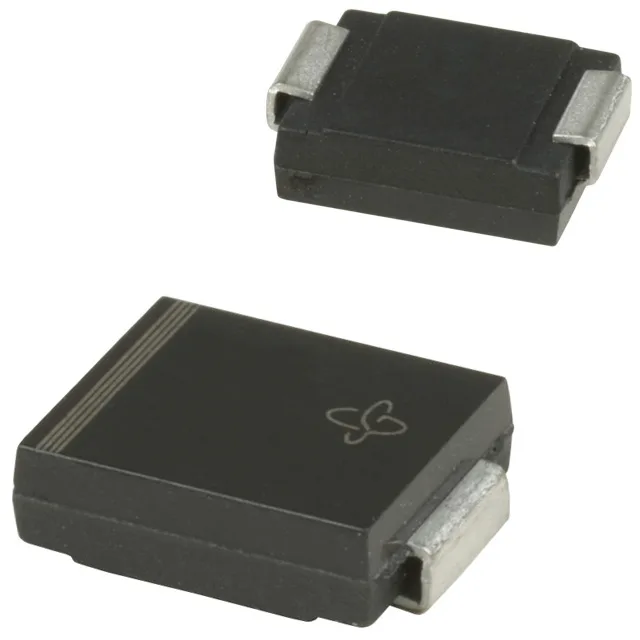
What the 1500W pulse rating means on the bench
The 1.5SMC20CA-E3/9AT: That 1500W figure tells you how much energy it can shunt before the junction gives up — a 54.2A peak pulse current gets clamped to 27.7V max, which is the voltage the protected IC actually sees during the event. When you find a scorched TVS on a board, the question is whether the clamping voltage stayed below the downstream part's abs-max, or the surge walked right through. The 17.1V reverse standoff means the diode sits on a 12V or 15V rail without leaking appreciably — the breakdown threshold is 19V minimum, so it stays out of the circuit until a transient pushes it over. Bidirectional construction (one channel) means one part protects both polarities, which halves the component count on a bipolar signal line like RS-485 or CAN bus.
Package and reflow reality
Housed in a DO-214AB (SMC) package with the supplier device package designated DO-214AB (SMCJ). The footprint is standard for this power class — the large tab on the bottom side carries the heat into the board copper, so the PCB pad area directly sets the thermal impedance during the pulse. Surface-mount only; the Tape & Reel packaging suits automated pick-and-place, and the -65°C to 150°C operating range means it survives wave solder and reflow without cracking the junction.