1500 W bidirectional TVS for 12 V / 15 V rail protection
The 1.5SMC20CA-E3/57T: With a 17.1 V reverse standoff voltage, it sits below the 18 V to 20 V regulation ceiling of a typical 15 V rail, so it stays transparent during normal operation and only conducts when a transient exceeds the breakdown threshold.
The 27.7 V maximum clamping voltage at 54.2 A peak pulse current tells you the highest voltage the downstream circuitry sees during a surge — a 24 V-rated capacitor or a 30 V MOSFET on that rail has margin, but a 20 V-rated part does not. The 19 V minimum breakdown voltage sets the threshold where the device starts conducting — between 17.1 V (standoff) and 19 V the TVS is off; above 19 V it clamps. This window is tight enough to protect a 15 V rail without nuisance triggering from normal ripple.
DO-214AB SMC package — board-fit and thermal path
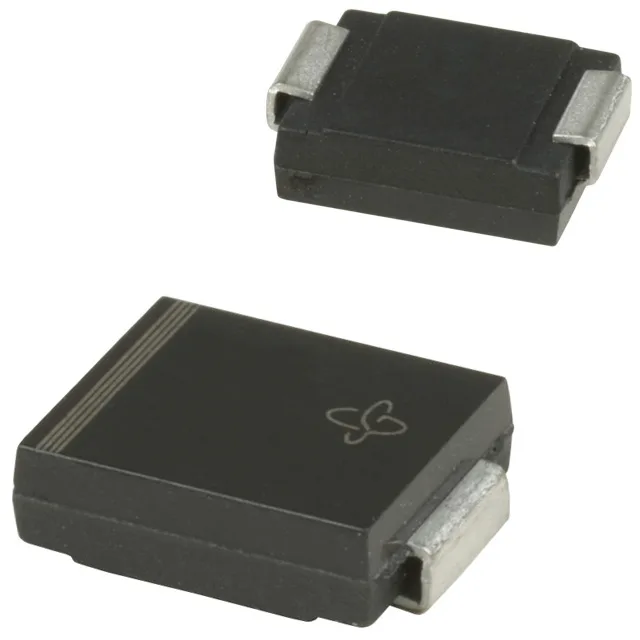
Housed in the DO-214AB (SMC) package, the device sits on a standard surface-mount footprint with a large copper pad on the cathode side — the pad area directly sets the junction-to-ambient thermal resistance, so a 1 oz copper pour of at least 300 mm² is recommended to sustain repetitive pulse trains without exceeding the 150 °C junction limit. The -65 °C to +150 °C junction temperature range covers cold-start automotive and outdoor telecom enclosures — the lower bound is well below the -40 °C typical for industrial, and the upper bound leaves margin for self-heating during a burst of surges.