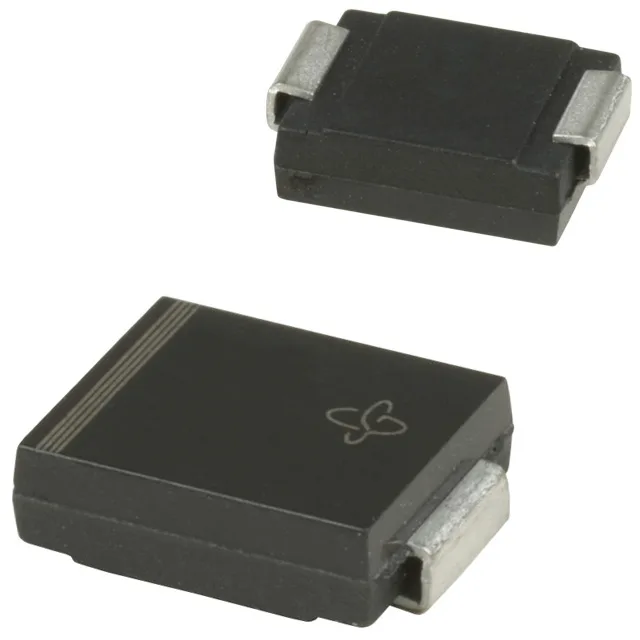
Vishay General Semiconductor - Diodes Division 1.5SMC18AHM3/I — Circuit Protection

1.5SMC18AHM3/I Vishay TVS Diode, 1500W, 15.3V Standoff

MPN1.5SMC18AHM3/I
Active

Vishay General Semiconductor 1.5SMC series TransZorb® TVS diode, Zener type, 1500W peak pulse power, 15.3V reverse standoff, 25.2V clamping, DO-214AB (SMC) surface mount, AEC-Q101 qualified.

Sourced new & surplus through independent channelsAuthenticity-screened · ESD-safe packingListing updated Aug 2026

Specifications

1.5SMC18AHM3/I specifications
ParameterValue
TypeZener
Series1.5SMC, TransZorb®
MountingSurface Mount
Voltage - breakdown17.1V
Voltage - clamping (Max) @ ipp25.2V
Voltage - reverse standoff15.3V
Current - peak pulse (10/1000μs)59.5A
Power - peak pulse1500W (1.5kW)
Power line protectionNo
Operating temperature-65°C ~ 150°C (TJ)
GradeAutomotive
PackageTape & Reel (TR)
ApplicationsTelecom
QualificationAEC-Q101
CaseDO-214AB, SMC
Unidirectional channels1

Product details

1500 W pulse rating and what it means on a 15 V rail

The 1.5SMC18AHM3/I is a 1500 W peak-pulse-power TVS diode from Vishay's 1.5SMC TransZorb® series, with a 15.3 V reverse standoff voltage and a 25.2 V clamping point at 59.5 A peak pulse current (10/1000 µs waveform).

AEC-Q101 and the -65 to 150 °C operating range

The junction temperature range spans -65 °C to 150 °C, so it survives cold-crank at -40 °C and hot soak at 125 °C with margin to the absolute max.

DO-214AB package and reflow handling

Housed in a DO-214AB (SMC) package, the part sits on a standard surface-mount footprint with the cathode band marking polarity. The large tab area on the SMC body helps conduct pulse heat into the PCB copper — keep the pad size per the Vishay application note to stay within the 1500 W derating curve. No power-line protection (unidirectional Zener only), so it clamps one polarity — use it on a single-rail bus where the transient is positive-going relative to ground.

Frequently asked questions

What automotive qualification does the 1.5SMC18AHM3/I carry?

It is AEC-Q101 qualified, which covers the stress tests and reliability screening required for automotive-grade discrete semiconductors.