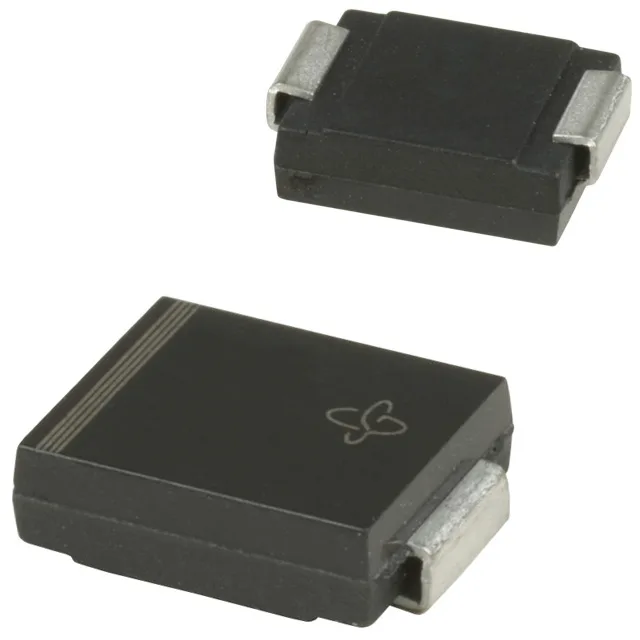
Surge protection for 145 V rails — the Vishay TransZorb® 1.5SMC170A-E3/57T
Its 162 V minimum breakdown voltage and 234 V maximum clamping at 6.4 A (10/1000 µs waveform) define the protection window: the rail sees no voltage above 234 V during a surge event. Housed in the DO-214AB (SMC) surface-mount package, this unidirectional device protects a single line. The 1500 W rating at 10/1000 µs is the standard industrial surge benchmark — it covers most IEC 61000-4-5 surge levels for equipment connected to 120/240 VAC mains after the rectifier.
Where the 1500 W rating matters in the protection chain
For shorter pulses (8/20 µs) the diode can handle much higher peak current, but the 10/1000 µs rating is the one that governs most AC-line transient protection designs. Operating temperature spans -65°C to 150°C junction, making it suitable for outdoor enclosures, engine compartments, or industrial cabinets where ambient heat plus self-heating from repetitive surges must be budgeted. No power line protection feature (internal crowbar or foldback) — this is a straight clamping diode. The 145 V standoff means it leaks negligible current below that voltage and only starts conducting significantly above 162 V.