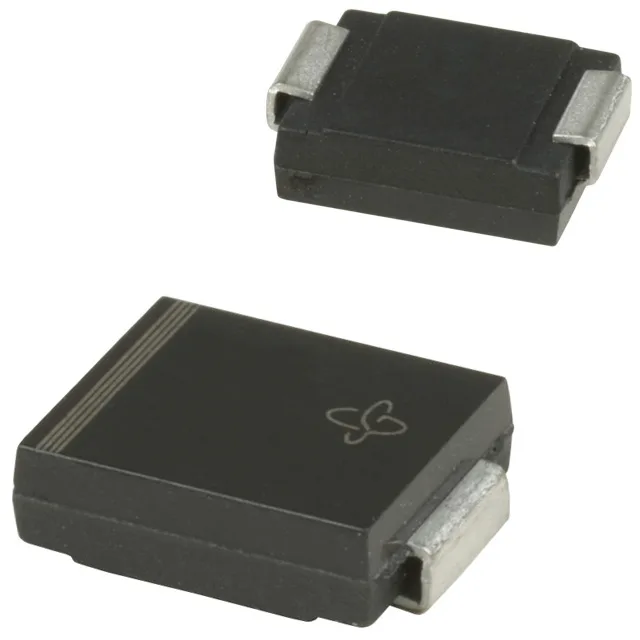
Vishay General Semiconductor - Diodes Division 1.5SMC160CAHM3/H — Circuit Protection

Vishay 1.5SMC160CAHM3/H TVS, 1500W, 136V, DO-214AB

MPN1.5SMC160CAHM3/H
Active

Vishay General Semiconductor - Diodes Division, 1.5SMC series, Automotive AEC-Q101 TransZorb® TVS, bidirectional Zener, 1500W peak pulse power, 136V reverse standoff, DO-214AB (SMC) package, Tape & Reel.

Sourced new & surplus through independent channelsAuthenticity-screened · ESD-safe packingListing updated Aug 2026

Specifications

1.5SMC160CAHM3/H specifications
ParameterValue
TypeZener
SeriesAutomotive, AEC-Q101, 1.5SMC, TransZorb®
MountingSurface Mount
Voltage - breakdown152V
Voltage - clamping (Max) @ ipp219V
Voltage - reverse standoff136V
Current - peak pulse (10/1000μs)6.8A
Power - peak pulse1500W (1.5kW)
Power line protectionNo
Operating temperature-65°C~150°C(TJ)
PackageTape & Reel (TR)
ApplicationsAutomotive, Telecom
CaseDO-214AB, SMC
Bidirectional channels1

Product details

What the 1500W peak pulse rating means on your board

The 1.5SMC160CAHM3/H is a 1500W (1.5kW) bidirectional TVS diode from Vishay's automotive-grade 1.5SMC series, built to clamp transients on 136V rails. The 1500W rating is peak pulse power for a 10/1000µs waveform — that's the energy it absorbs in a single surge event, not continuous dissipation. On a 136V nominal bus, a spike that would otherwise punch through downstream silicon gets clamped at 219V max, shunting 6.8A peak pulse current through the die.

Voltage thresholds that define the protection window

Three voltage numbers set the operating boundaries: reverse standoff at 136V (the DC bus voltage it blocks without conducting), breakdown at 152V minimum (where it starts to avalanche), and clamping at 219V max at the rated 6.8A peak pulse current. The gap between 152V and 219V is the clamping region — the lower it is, the tighter the protection. For a 136V rail, this part keeps the transient ceiling under 220V, which is safe for most 150V-rated downstream components.

DO-214AB (SMC) package and board integration

The bidirectional configuration means a single device protects both polarities on the line — no need to pair two unidirectional diodes back-to-back. The package footprint is standard for the 1.5SMC series, so a board layout for the base number 1.5SMC160 accepts this variant without changes.

Frequently asked questions

What is the closest pin-compatible alternative to this TVS?

Within the same 1.5SMC series, other bidirectional voltage variants share the identical DO-214AB footprint and 1500W pulse rating — the only difference is the standoff/breakdown/clamp voltage set. For a 136V rail, the 1.5SMC160CAHM3/H is the correct voltage grade; a different voltage variant would shift the protection window and may not clamp before downstream parts fail.