Clamping voltage and pulse power for 136 V rails
The 1.5SMC160AHM3_A/H: The unidirectional single-channel design (one channel) and the -65°C to 150°C junction temperature range suit it for under-hood or outdoor telecom enclosures where the ambient sees wide thermal swings. The AEC-Q101 qualification (Automotive, AEC-Q101) confirms it passes the stress tests for automotive-grade discrete semiconductors — temperature cycling, high-temperature reverse bias, and ESD robustness — making it a fit for powertrain and body electronics that must survive the engine bay's thermal profile.
Breakdown tolerance and clamping margin
The minimum breakdown voltage is 152 V, which sits 16 V above the 136 V reverse standoff. This 12 % margin means the diode does not conduct at the nominal rail voltage, yet triggers before the protected device's absolute maximum rating — typically 20-30 % above the rail. The 219 V maximum clamp at 6.8 A peak pulse current defines the voltage the downstream components must survive during a transient event.
Automotive-grade TVS in a DO-214AB footprint
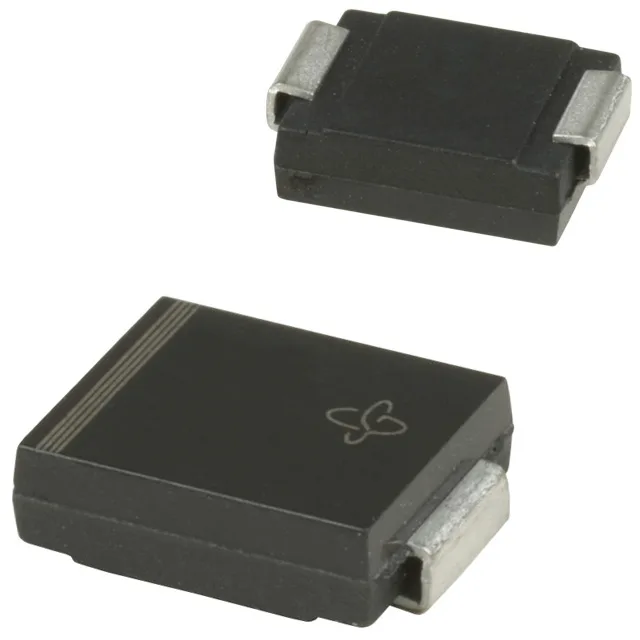
Housed in the DO-214AB (SMC) package, the part is surface-mount and supplied on tape and reel. The SMC body handles the 1500 W pulse without package cracking — the copper leadframe and molded epoxy meet the JEDEC moisture sensitivity level typical for this class. For a 136 V rail in an automotive ECU, the PCB layout should keep the TVS close to the connector or the protected IC to minimise inductive voltage drop between the clamp and the load.
Active production and sourcing posture
The product status is Active, meaning Vishay continues to manufacture this order code.