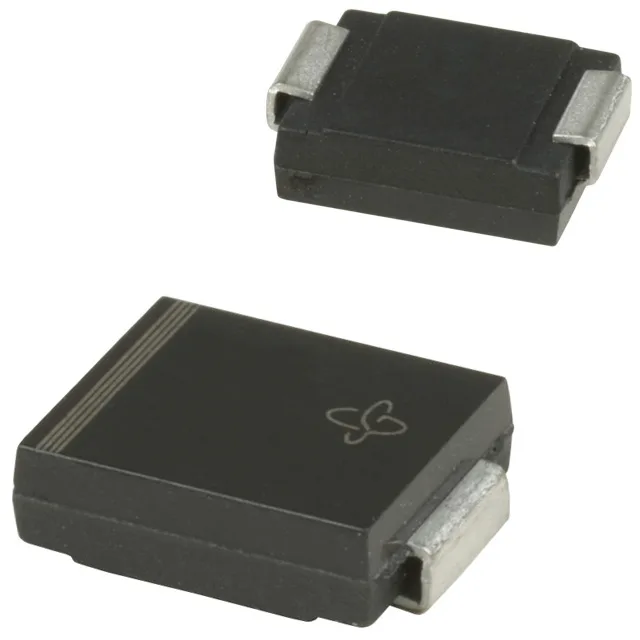
AEC-Q101 qualified bidirectional TVS for 12V rails
The 1.5SMC15CAHM3_A/I is a bidirectional Zener-type TVS diode from Vishay's 1.5SMC series, qualified to AEC-Q101 for automotive stress reliability. Its 12.8 V reverse standoff voltage directly protects 12 V nominal supply rails — the clamping threshold at 21.2 V keeps downstream silicon within safe operating area during a load-dump or inductive kickback transient. The DO-214AB (SMC) surface-mount package suits automated assembly for automotive ECU and telecom line-card layouts. Minimum breakdown voltage is 14.3 V, providing a guard band above the 12.8 V standoff that accounts for component tolerance and temperature drift. Power line protection is not supported — this is a signal-rail or low-power-bus clamp, not a mains-side suppressor.
Active production, sourced per RFQ
As an AEC-Q101 qualified device, it carries the automotive-grade documentation package — PPAP, IMDS, and RoHS/REACH compliance data are maintained by Vishay. The TransZorb® series has a long production history, so PCN risk is low for existing designs.