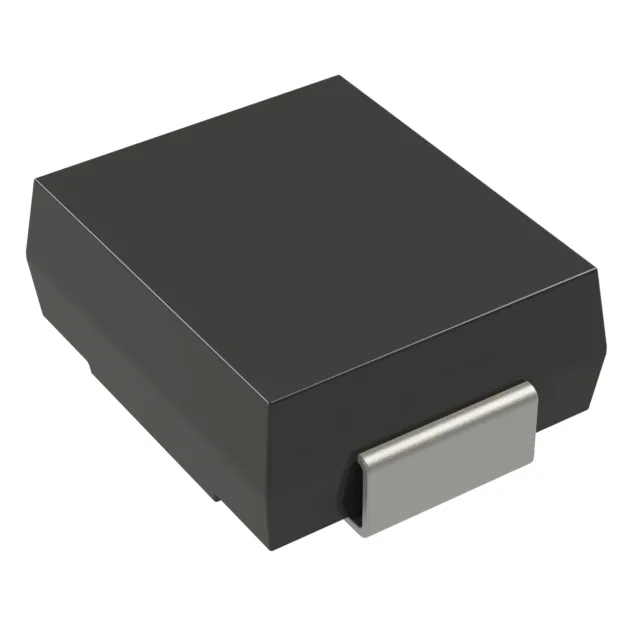
The 1.5SMC150CAHM3_A/H: That 1.5 kW rating means it clamps a 7.2 A surge to 207 V max, protecting downstream circuitry from lightning-induced transients and inductive load dumps on a 128 V bus. The reverse standoff voltage of 128 V sets the continuous DC or AC peak operating level the diode leaves untouched; the breakdown window starts at 143 V minimum, and clamping locks in at 207 V. For a 128 V nominal telecom line or automotive 24 V system (where load-dump peaks can hit 174 V), this TVS sits below the downstream component's absolute maximum rating.
AEC-Q101 automotive grade — what it certifies for the BOM
The -65°C to 150°C junction temperature range covers under-hood and engine-bay thermal profiles where a standard commercial TVS would drift leakage or fail open. The automotive grade also implies production-part approval process (PPAP) documentation is available from Vishay — a requirement for Tier-1 suppliers submitting a BOM for a production vehicle program.
DO-214AB SMC package and board-fit note
The DO-214AB (SMC) package is the standard surface-mount footprint for TVS diodes in this power class. The copper pad area under the cathode tab sets the junction-to-ambient thermal resistance; for a 1500 W pulse, the board's copper plane acts as the heat sink, so the PCB layout should follow Vishay's recommended land pattern for the SMC case to keep the thermal impedance within the datasheet curve. Tape-and-reel packaging (per the entry) suits automated pick-and-place assembly. The base product number 1.5SMC150 identifies the voltage family; the CA suffix marks the bidirectional polarity, and the HM3_A/H suffix encodes the AEC-Q101 automotive grade and the lead-free / RoHS-compliant termination finish.
Sourcing and lifecycle posture
The sealed-reel packaging with consistent date codes is the standard supply format for this active line.