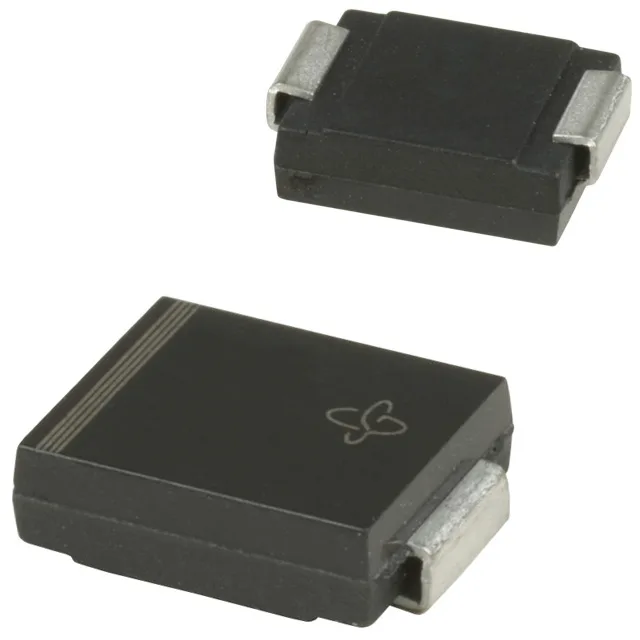
1500 W bidirectional clamp in a DO-214AB footprint
The 1.5SMC150CA-M3/57T: It clamps transients at 207 V maximum with a 128 V reverse standoff voltage, making it a fit for 120 VAC rail protection or DC bus clamping in industrial power supplies. The DO-214AB (SMC) package is a standard surface-mount footprint for high-energy TVS diodes — the same pad layout serves unidirectional and bidirectional variants, so a single PCB land pattern covers the family. The 1500 W rating at the 10/1000 µs pulse means it absorbs surge energy from inductive load switching or lightning-induced transients without the junction exceeding the 150 °C limit.
Breakdown, clamp, and standoff — the protection window
The 128 V standoff voltage means the diode presents a high-impedance shunt below the normal operating rail — it does not leak appreciably until the transient exceeds that threshold. Operating temperature spans -65 °C to 150 °C junction, which covers both cold-start conditions in outdoor gear and the self-heating from repetitive surge events.
Active lifecycle — no LTB clock ticking
For BOM continuity, the bidirectional channel means a single order code replaces two unidirectional diodes in antiparallel — saves board space and reduces pick-and-place cost.