1.5 kW peak pulse — what that 8.4 A clamp means on a 12 V bus
The 1.5SMC130AHM3_A/I: The clamping voltage at that pulse current is 179 V max, triggered when the reverse standoff of 111 V is exceeded. On a 12 V automotive rail, a 179 V clamp is well within the typical 40 V load-dump survival spec of downstream ECUs — the TVS absorbs the surge before the protected IC sees destructive voltage. The 8.4 A peak pulse current is the current the diode shunts during the clamp event. For a 1500 W part at 179 V, that current is consistent with the power rating — the junction absorbs the energy without exceeding the 150°C Tj max.
AEC-Q101 — the qualification that unlocks automotive BOMs
The 1.5SMC130AHM3_A/I carries AEC-Q101 qualification, meaning it has passed the stress tests (temperature cycling, HTRB, H3TRB, ESD) required for automotive-grade discrete semiconductors. This is the minimum entry for an under-hood or cabin electronics BOM that demands PPAP-level traceability. Operating temperature spans -65°C to 150°C — the 150°C upper limit covers the engine-bay ambient plus self-heating during the pulse. No derating needed at 125°C ambient; the junction margin is there for the surge.
DO-214AB footprint — standard SMC for TVS replacement
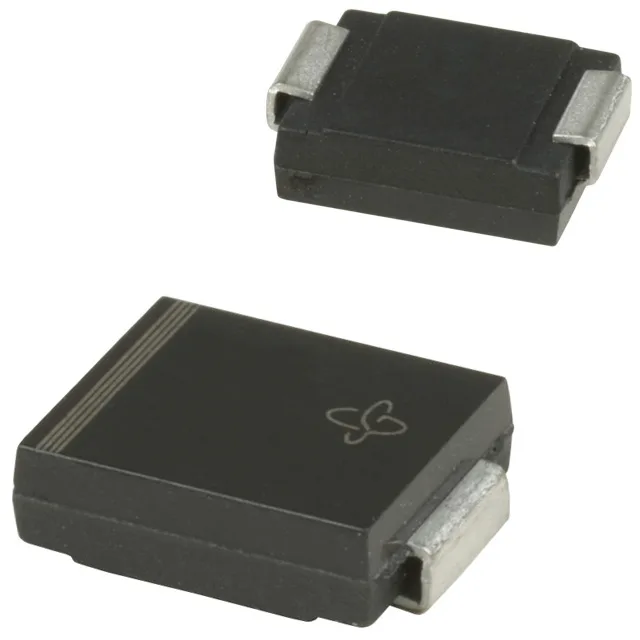
The DO-214AB (SMC) package is a common surface-mount TVS footprint. The copper pad area under the cathode tab sets the thermal resistance — a 25 mm² pad on a 2 oz copper board keeps the junction-to-ambient low enough for repetitive pulse trains. The package is compatible with standard SMC reflow profiles.