Automotive-grade TVS with AEC-Q101 pedigree
The 1.5SMC11CAHM3_A/I: The 9.4 V reverse standoff voltage means it stays transparent on a 12 V nominal automotive rail, only conducting when the line exceeds the 10.5 V minimum breakdown threshold.
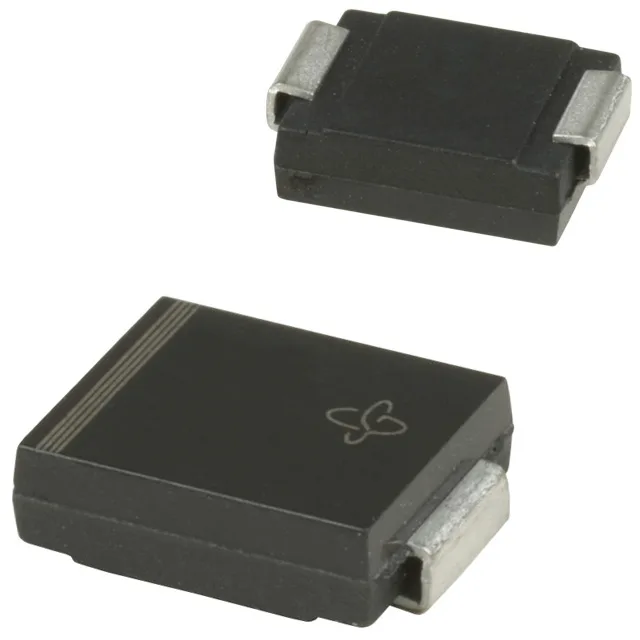
The 9.4 V standoff voltage is the maximum DC or peak voltage the TVS can withstand without conducting — on a 12 V battery line with load-dump transients, this part stays off during normal operation. The 10.5 V minimum breakdown ensures the avalanche junction fires before the downstream IC's abs-max rating is reached. Clamping at 15.6 V maximum under the 96.2 A peak pulse current means a 24 V-rated ECU input sees only 65 % of its rating during a 10/1000 µs surge event. The 1500 W peak pulse capability covers ISO 7637-2 pulse 5a load-dump levels typical in passenger-vehicle 12 V systems. Operating temperature spans -65°C to 150°C junction — this covers the full under-hood thermal profile including hot-soak at 125°C with margin. The DO-214AB (SMC) surface-mount package provides a low-inductance path for fast transient edges, critical when the rise time of the threat is under 1 µs.
AEC-Q101 compliance and production status
The 'HM3' suffix in the order code indicates Vishay's automotive-grade screening flow. For an OEM auditor, the PPAP documentation and AEC-Q101 certificate are available through the supply chain.