Breakdown and clamping — what 10.5V min and 15.6V max mean on the bench
The 1.5SMC11CA-E3/57T: The reverse standoff voltage is 9.4V — the maximum DC voltage the TVS blocks without conducting. Above that, breakdown starts at 10.5V minimum, and under a 96.2A surge the voltage is clamped to 15.6V max. For a 9V rail with 10% tolerance (9.9V max), the TVS sits below the rail's peak and activates before the rail exceeds the downstream IC's abs-max rating. The 1500W rating is the peak pulse power into a 10/1000µs waveform. For shorter transients (e.g., 8/20µs per IEC 61000-4-5), the device can handle significantly higher peak current — the datasheet derating curve applies.
Surface-mount footprint and board integration
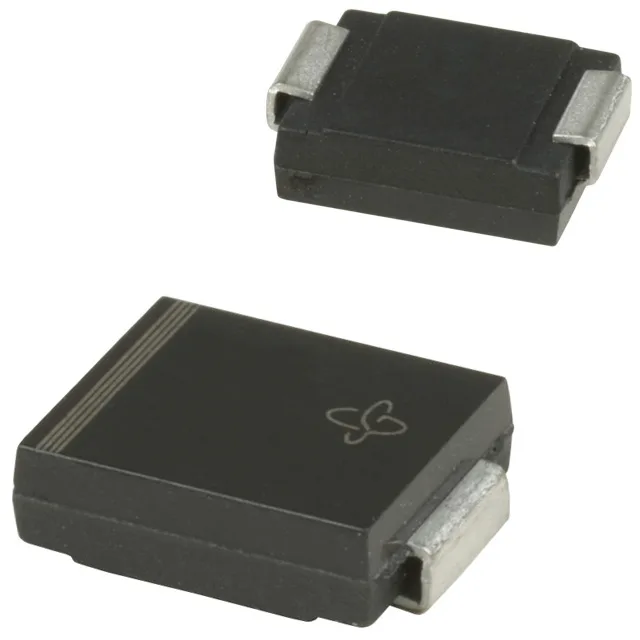
Housed in a DO-214AB (SMC) package, the device is a standard surface-mount footprint with a large copper pad on the cathode side (marked by the band). The recommended land pattern per Vishay's application note is a 4.5mm × 4.0mm pad on each terminal with adequate thermal via stitching to the ground plane — the copper area directly affects the thermal impedance during repetitive surge events. The package is supplied on tape and reel (7-inch reel, 850 parts per reel) per EIA-481, compatible with standard pick-and-place equipment. The MSL rating is Level 1 (unlimited floor life) per J-STD-020, so no bake-out is required before reflow.
Vishay lists the 1.5SMC11CA-/57T as Active. The part is available through authorized distribution and independent channels — no supply risk for existing BOMs or new designs.