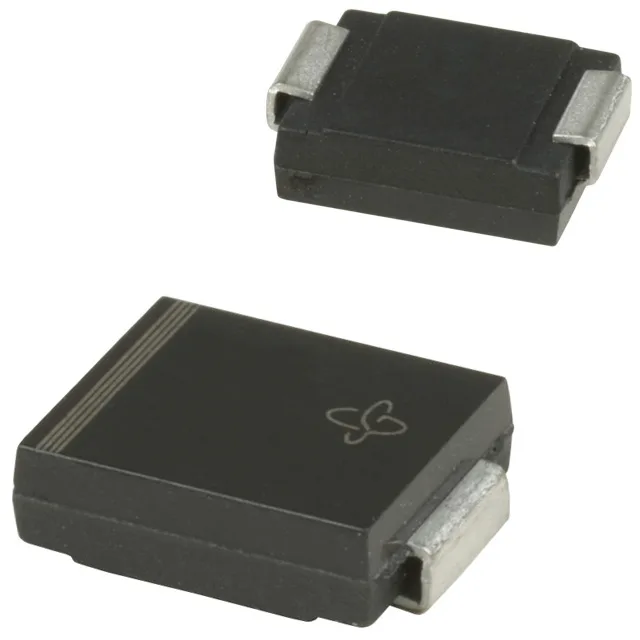
What the 1500W rating means on the bench
The 1.5SMC110CA-E3/57T: That 1500W figure is the peak pulse power dissipation at the clamping voltage — it tells you the device can absorb a transient of that energy without failing, not the steady-state power. On a 24V or 48V DC bus, the 94V reverse standoff means the diode stays out of the circuit during normal operation and only starts conducting when the transient exceeds the breakdown voltage.
Package and board-fit for the DO-214AB SMC
The SMC footprint is larger than the smaller SMA/SMB siblings — the wider body and larger copper pad area under the cathode tab sink more heat from the pulse into the PCB copper. For a 1500W pulse, the thermal impedance to the board is the limiting factor; a 1-ounce copper pour of at least 25mm² under the package keeps the junction temperature rise within the -65°C to 150°C operating range. The base product number is 1.5SMC110, which is the root for the unidirectional and bidirectional variants in this voltage class.
Lifecycle and sourcing — still an active line
The 1.5SMC110CA-/57T carries an Active product status from Vishay General Semiconductor. This is not an NRND or end-of-life part — it remains in the current production portfolio, so new designs can specify it without a last-time-buy risk.