Clamping voltage and breakdown margin for 94 V rails
The 1.5SMC110AHM3_A/I: The 94 V reverse standoff voltage (VRWM) means this TVS sits across a 94 V DC bus without conducting in normal operation. When a transient pushes the line above 105 V (the minimum breakdown voltage), the Zener junction avalanches and clamps the surge to 152 V maximum at the rated 9.9 A peak pulse current. The margin between the rail voltage and the clamp ceiling — roughly 58 V — is the headroom that protects downstream 100 V-rated MOSFETs and ICs from overvoltage failure. For shorter pulses (8/20 µs), the peak power capability increases significantly, but the 10/1000 µs figure is the conservative one to use for BOM derating calculations.
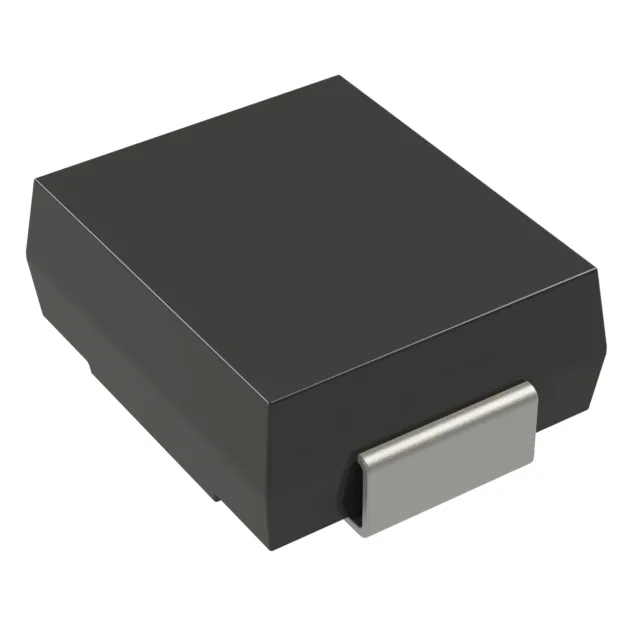
DO-214AB SMC package and board-fit considerations
Housed in the DO-214AB (SMC) package, this TVS is a surface-mount device with a standard JEDEC footprint. The SMC body is larger than the smaller SMA/SMB packages, which helps spread the thermal pulse energy across the copper pad area — critical for absorbing the 1500 W transient without exceeding the 150°C junction limit. The base product number is 1.5SMC110, and the full suffix identifies the automotive-grade, AEC-Q101 qualified variant with the specific lead-free finish.
Active lifecycle and compliance documentation
Compliance documentation available from Vishay includes RoHS and REACH declarations. The AEC-Q101 qualification report and PPAP documentation are maintained by Vishay for OEM audit purposes; these are typically made available through the manufacturer's qualification database upon request.