What the 1500 W rating means for your protection design
The 1.5KE68CA-E3/51: That 1500 W figure is the maximum energy the part can absorb in a single surge event — it does not mean continuous dissipation. For a 92 V clamp voltage, the corresponding peak pulse current is 16.3 A, which is the current the device shunts during the transient. The three voltage thresholds that define fit are: 58.1 V reverse standoff (the maximum DC or AC peak voltage the protected line can carry without the TVS conducting), 64.6 V minimum breakdown (where avalanche conduction starts), and 92 V maximum clamping (the voltage the load sees during the surge). A 48 V nominal bus with 10 % tolerance sits at 52.8 V, well below the 58.1 V standoff — this part is sized for that rail.
Package and board integration
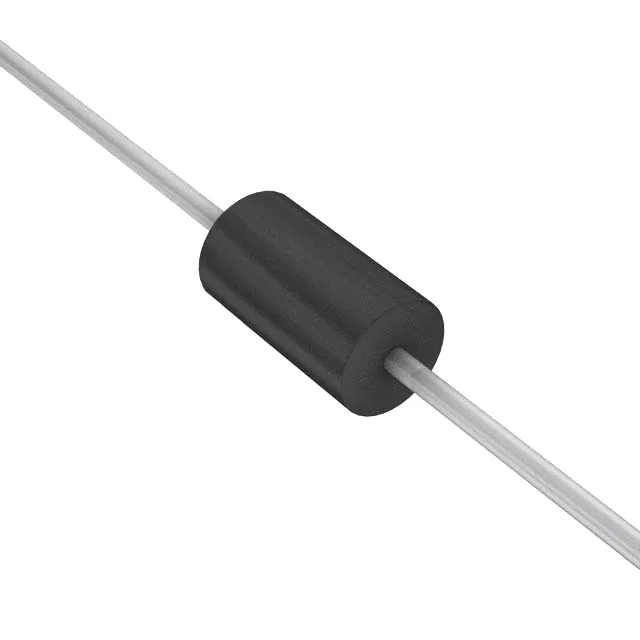
Housed in a DO-201AA / DO-27 axial-leaded package, this part mounts through-hole. The axial leads require the body to be suspended above the board — the lead bend radius and standoff height must follow the Vishay application note to avoid cracking the glass passivation. The 1.5KE package suffix means the cathode band is marked; for a bidirectional part, orientation does not matter, but the marking still follows the convention. The 175°C TJ ceiling means the part can sit near a hot power supply or in an engine bay without derating the surge capability — but the 1500 W rating is at 25°C; derate linearly above that per the datasheet curve.
Last Buy — sourcing reality for this Vishay TVS
Vishay has placed the 1.5KE68CA-/51 into Last Buy status. This is not yet obsolete — the factory still accepts final orders within a defined window — but new designs should not specify this part number. For existing BOM lines, the remaining factory allocation is finite; once exhausted, supply shifts to independent distribution channels. The base product number 1.5KE68 covers the whole family; if a different package or polarity variant is acceptable, the BOM can be updated without a board spin.
Bidirectional — one part for both polarity surges
This is a single-channel bidirectional TVS, meaning it clamps transients of either polarity symmetrically. On an AC signal line or a bipolar DC bus, one bidirectional part replaces two unidirectional diodes back-to-back, saving board space and reducing part count. The breakdown and clamping voltages are the same in both directions.