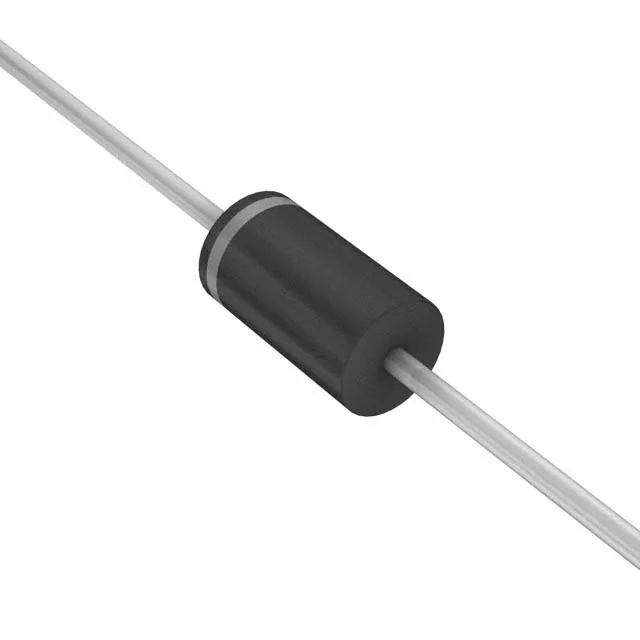
What the 1.5 kW rating means on the bench
The 1.5KE56-E3/54: That 1.5 kW figure is the dissipation the die can absorb for a single surge event — it's not continuous. The part clamps at 80.5 V max when hit with its rated 18.6 A peak pulse current, which is the number that tells you whether the downstream silicon survives. The reverse standoff voltage is 45.4 V, meaning the diode stays off below that rail voltage and only starts conducting when the transient pushes above the 50.4 V minimum breakdown threshold. For a 48 V bus or a 36 V battery line with transients, this is the right working voltage window.
Obsolete — sourcing reality for this TVS
Vishay lists the 1.5KE56-/54 as obsolete. That means the only channel for this exact part number is independent surplus and broker inventory — the kind of stock that sits on a shelf because someone over-ordered a reel a decade ago. For a repair bench or a legacy BOM that can't spin a board, the DO-201AA axial footprint is standard across the 1.5KE series, so a functionally equivalent TVS from the same family with the same standoff voltage and package will drop in. The 1.5KE56A (bidirectional) or 1.5KE56CA (bidirectional) are common cross-shop candidates, but confirm the polarity and unidirectional requirement before swapping.
Temperature range and package fit
The DO-201AA (DO-27) axial leaded package is through-hole — it takes up board space but handles the thermal pulse of a 1.5 kW surge better than a surface-mount equivalent because the leads sink heat into the PCB copper. The tape-and-reel packaging (/54 suffix) means it shipped on a 13-inch reel for automated insertion. When sourcing from surplus, expect loose tubes or cut tape unless the lot is still in original reel form.