What the 1500W rating means for rail protection
The 1.5KE51CA-E3/73: That 1500W figure is the maximum power the die can absorb in a single transient event — it sets the upper limit on surge energy before the junction fails. For a 70.1V clamping voltage, the device can handle 21.4A of peak pulse current, which covers most industrial surge scenarios like inductive load switching or lightning-induced transients on 48V telecom buses. The reverse standoff voltage is 43.6V, meaning the diode stays in high-impedance mode below that level and does not leak appreciably on a nominal 36V or 42V rail. Breakdown starts at 48.5V minimum, and clamping is guaranteed at 70.1V maximum — the protection window is tight enough to keep downstream silicon safe without nuisance triggering on normal supply ripple.
Bidirectional clamping for AC or bipolar lines
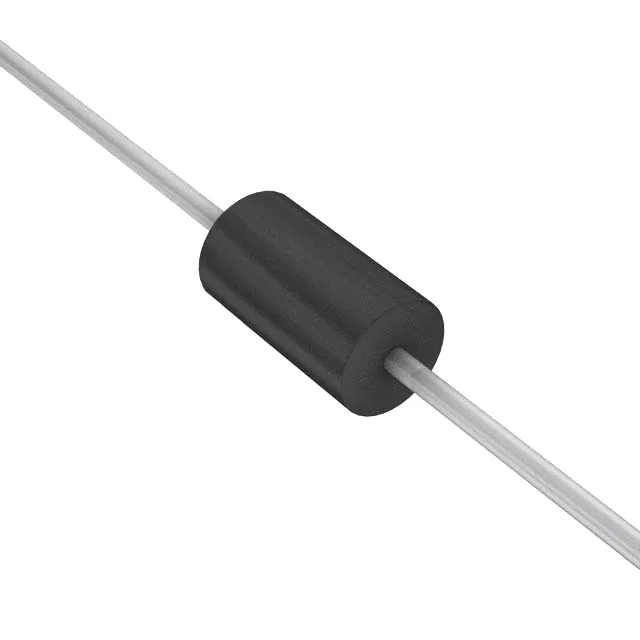
With a single bidirectional channel, this part clamps symmetrically in both polarities — useful for AC signal lines, bipolar DC supplies, or any circuit where the transient polarity is unknown. The junction operates across -55°C to 175°C, so the clamping voltage shifts only modestly over temperature; at 125°C ambient the breakdown voltage typically rises about 5% from the 25°C value, which is within the datasheet limits for most power supply designs. The DO-201AA (DO-27) axial package is a through-hole form factor that handles the thermal pulse of a 1500W surge without delaminating — the lead frame and molded body are sized for the energy, not just the steady-state current. No power line protection feature is built in (this is a bare TVS, not a filtered or coordinated protector), so it relies on external fusing or PTC coordination for sustained overvoltage events.
Active production and sourcing posture
That means it is still in the regular production schedule at Vishay's fabs, and the supply channel is the standard franchised distribution network plus the independent market for spot needs. The -/73 suffix indicates the lead-free, RoHS-compliant finish in tape-and-box packaging, which is the current mainstream variant.