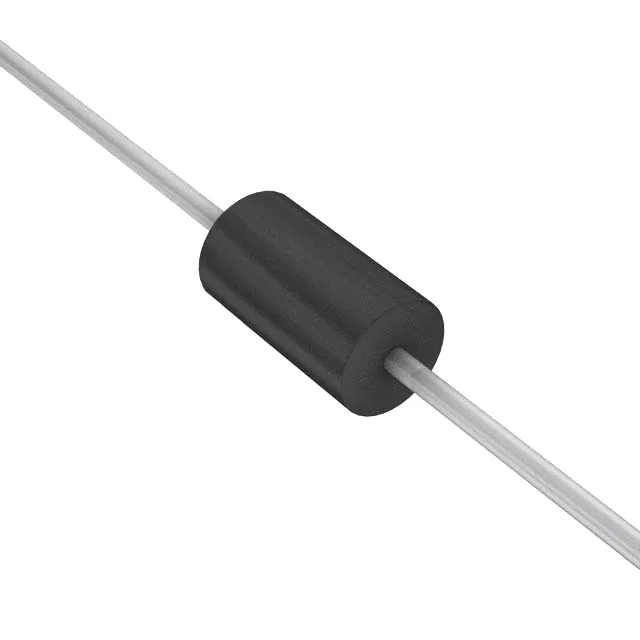
Vishay General Semiconductor - Diodes Division 1.5KE51CA-E3/54 — Circuit Protection

1.5KE51CA-E3/54 Vishay TVS, 1500W, 43.6V Standoff

MPN1.5KE51CA-E3/54
Active

Vishay General Semiconductor - Diodes Division, TransZorb® series, TVS Zener diode, 1.5KE51CA-/54, 1500W peak pulse, 43.6V standoff, bidirectional, DO-201AA axial, through hole.

Sourced new & surplus through independent channelsAuthenticity-screened · ESD-safe packingListing updated Aug 2026

Specifications

1.5KE51CA-E3/54 specifications
ParameterValue
TypeZener
SeriesTransZorb®
MountingThrough Hole
Voltage - breakdown48.5V
Voltage - clamping (Max) @ ipp70.1V
Voltage - reverse standoff43.6V
Current - peak pulse (10/1000μs)21.4A
Power - peak pulse1500W (1.5kW)
Power line protectionNo
Operating temperature-55°C~175°C(TJ)
PackageTape & Reel (TR); Cut Tape (CT)
ApplicationsGeneral Purpose
CaseDO-201AA, DO-27, Axial
Bidirectional channels1

Product details

1500W peak pulse — clamping at 70.1V

The 1.5KE51CA-E3/54: The 43.6 V reverse standoff voltage means the diode draws negligible leakage below that rail level, so it sits across a 36 V or 42 V bus without loading it. Breakdown occurs at 48.5 V minimum, giving a narrow guard band between normal operation and clamping — the rail stays protected without nuisance triggering from transients that stay below the standoff.

A single bidirectional channel protects against positive and negative surges, so a single device replaces two unidirectional TVS diodes in back-to-back configuration on AC or bipolar DC lines. The DO-201AA axial-lead package (DO-27 equivalent) is through-hole mounted — the leads handle the thermal pulse of a 1500 W surge without the trace-lift risk of a surface-mount part on a standard FR-4 pad.

The TransZorb series is a Vishay standard for general-purpose circuit protection — no power-line protection rating, so it is intended for signal and DC bus clamping, not AC mains.

Frequently asked questions

Is the 1.5KE51CA-/54 bidirectional or unidirectional?

It is a single bidirectional channel, clamping both positive and negative transients with one device.