What the 1.5 kW rating means for your rail
The 1.5KE510-E3/73: The 729 V maximum clamping voltage at 2.06 A peak pulse current (10/1000 µs waveform) defines the voltage the downstream circuitry must survive — anything rated below that clamp risks avalanche breakdown during a surge. With a reverse standoff of 413 V and a minimum breakdown of 459 V, this part sits on a 400 V DC bus or a 277 V AC line (rectified). The 175 °C maximum junction temperature gives margin in high-ambient enclosures, though the derating curve at elevated temperatures reduces the effective peak pulse power.
Obsolete — sourcing through surplus channels
Vishay lists the 1.5KE510-/73 as obsolete. No pin-compatible direct replacement from Vishay has been published. The DO-201AA axial-lead package (also known as DO-27) is a standard footprint that many TVS families share, so a parametric substitute from another series may fit the same board hole pattern. However, the clamping voltage and standoff must match the protection requirement — a substitute with a lower clamp may not survive the same transient energy.
Package and mounting — through-hole axial
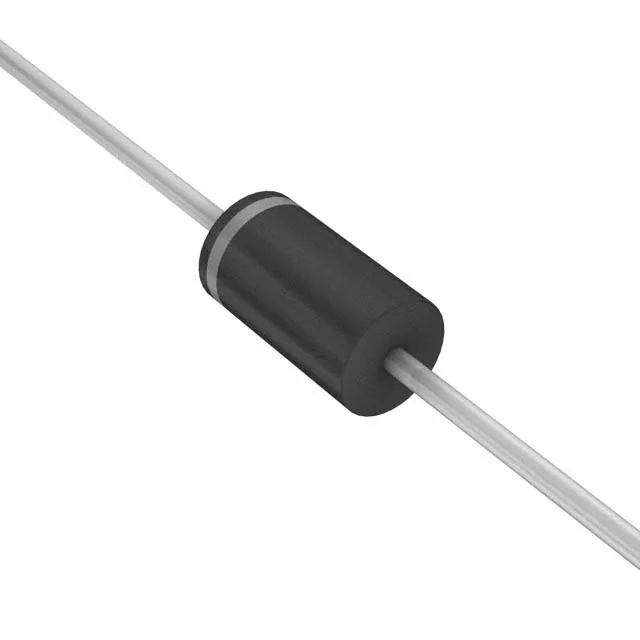
The DO-201AA axial package is a through-hole form factor, soldered into a PCB or wired into a terminal block. The tape-and-box packaging (/73 suffix) ships the parts in a box with tape spacing suitable for automatic insertion equipment — store the reels dry, as the axial leads are not moisture-sensitive but the box should be kept in a climate-controlled area to avoid oxidation on the solderable surfaces. Single unidirectional channel — the cathode band marks the anode-to-cathode orientation. For bidirectional protection on an AC line, two parts back-to-back or a single bidirectional TVS would be needed.