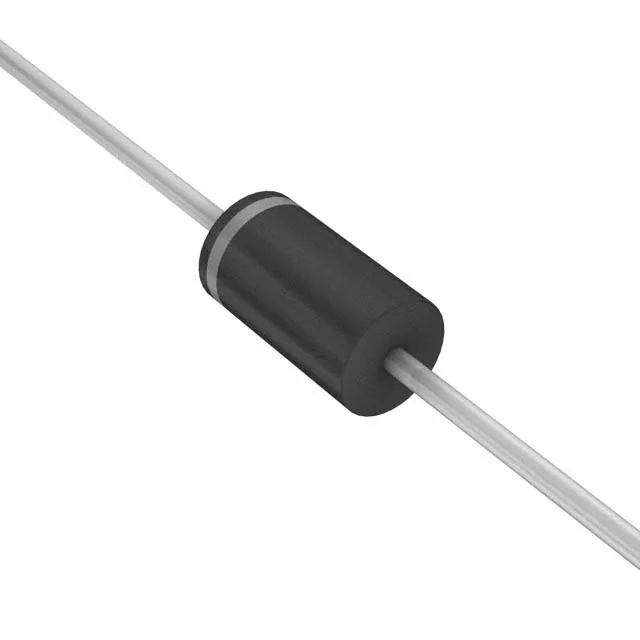
What the 1500W peak pulse rating means for your protection design
The 1.5KE47C-E3/54: That 1500W figure is the maximum power the device can absorb in a single transient — it does not mean continuous dissipation. For a 38.1V standoff rail, the clamping voltage hits 67.8V at 22.1A peak pulse current, so the TVS holds the line voltage below the downstream component's abs-max rating during a surge. The DO-201AA axial package with through-hole mounting is a standard footprint for board-level transient protection in power supplies, telecom interfaces, and industrial control inputs.
Obsolete — sourcing reality for the 1.5KE47C-E3/54
The DO-201AA axial package and bidirectional Zener topology are common enough that a parametric search for a 1500W, 38.1V standoff bidirectional TVS in the same package will yield functional equivalents — but pin-compatibility is package-defined, not guaranteed by the replacement part's specs.
This covers the full industrial and automotive under-hood ambient range, with margin for self-heating during repetitive surge events. The 175°C Tj max is typical for silicon TVS diodes — derate the peak pulse power above 25°C per the datasheet curve to stay within the SOA.