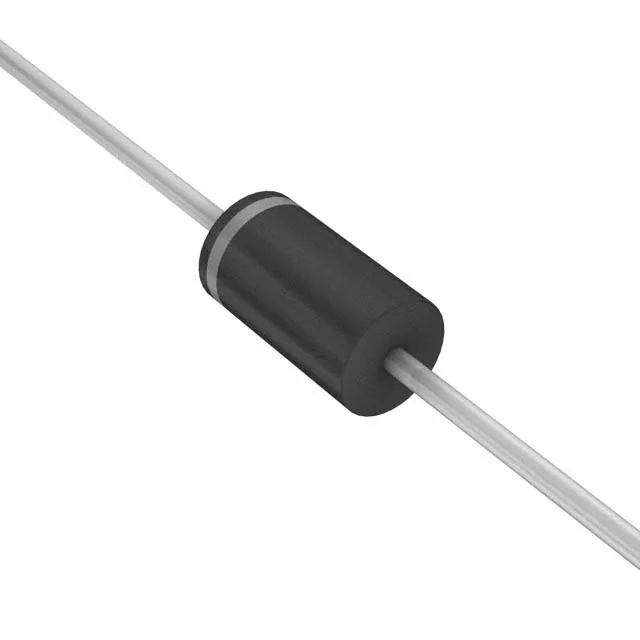
Bidirectional 1500W TransZorb — what the ratings mean for your rail
The 1.5KE400C-E3/54: That 1.5 kW rating means it absorbs a single 2.6 A pulse up to 574 V without failing short, which is the spec that decides whether your 324 V nominal rail survives a lightning-induced transient or a load-dump event. The 324 V reverse standoff is the maximum continuous DC voltage the part blocks without conducting; above that it starts to avalanche, and at 360 V (minimum breakdown) it is fully clamping.
Obsolete — sourcing reality for this Vishay TVS
No official successor part number is recorded from Vishay for this specific variant, so a pin-compatible replacement would need to be validated against the same 324 V standoff and 574 V clamp targets.
DO-201 axial package and board integration
Through-hole DO-201AA (DO-27) axial package — the leads exit both ends and the body sits above the board. The 1.5KE package code on the supplier device field confirms the standard 1.5 kW TransZorb body size, so any existing footprint for a Vishay 1.5KE-series axial TVS accepts this part without layout changes. The wide junction temperature window also means derating for ambient heat in a sealed enclosure is less aggressive than with a 125°C-rated part.