1500W bidirectional TVS — what the ratings mean for your protection design
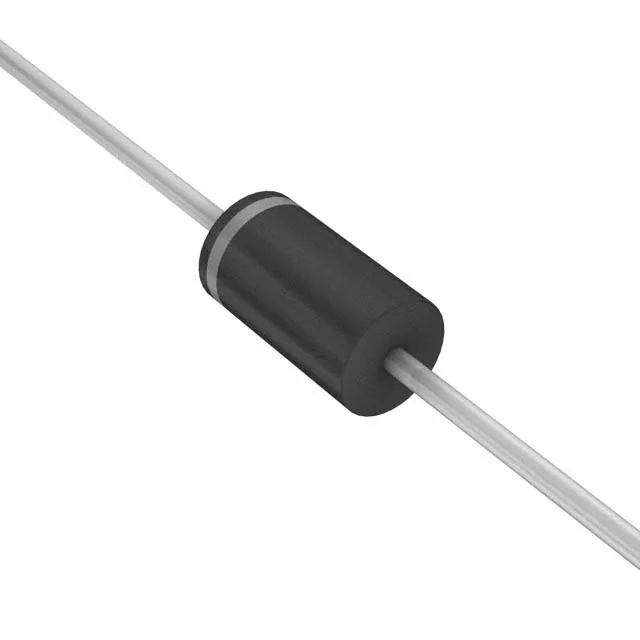
The 1.5KE39C-E3/54: The 31.6V reverse standoff voltage means it holds off normal DC bus or signal line levels up to that point without conducting — above that it clamps transients to 56.4V maximum at 26.6A peak pulse current, protecting downstream silicon from overvoltage damage. The bidirectional configuration (single channel) suits AC lines or DC lines where polarity reversal is possible — no need to orient the part in the circuit. The DO-201AA axial through-hole package handles the thermal pulse of a 1500W surge without cracking the junction, provided the lead length is kept short to minimise inductance.
Lifecycle reality — obsolete, sourced through independent channels
Vishay has marked the 1.5KE39C-/54 as obsolete. The 1.5KE39C-/54 remains a standard-package TVS in the TransZorb family, so functional equivalents from other manufacturers (same DO-201AA footprint, same 31.6V standoff, bidirectional) can be cross-referenced for new designs, but pin-compatible replacement from Vishay's own catalogue is not documented.
Temperature range and deployment context
The wide Tj range also means the leakage current at high temperature — a concern with Zener-based TVS devices — stays within the datasheet limits up to 175°C. Through-hole axial mounting (DO-201AA) is preferred in high-reliability designs where the board sees mechanical stress or where the TVS is hand-soldered into a repair — the leaded package absorbs vibration better than a surface-mount equivalent. The 1500W rating is peak pulse, not continuous; derate for repetitive surges based on the pulse train duty cycle.