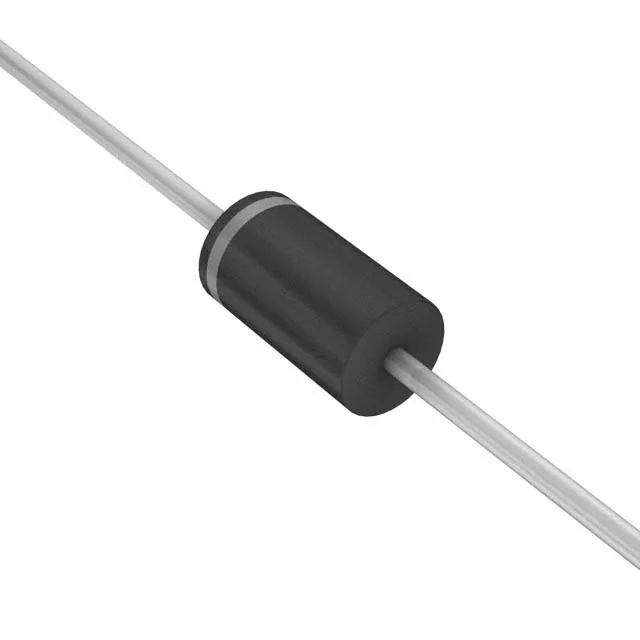
Automotive-grade TVS — what 1500 W means for the BOM
The 1.5KE33HE3/54: The 26.8 V reverse standoff means it sits across a 24 V nominal rail without leakage; the 47.7 V clamping voltage at 31.4 A peak pulse current defines the voltage the downstream circuitry must survive during a transient. That 1500 W rating is the pulse energy limit — derate for higher ambient temperature per the thermal impedance curve in the full datasheet.
AEC-Q101 qualification and underhood temperature band
This part carries AEC-Q101 automotive qualification — the discrete-component equivalent of AEC-Q100 for ICs. The -55°C to 175°C operating junction range matches the underhood temperature envelope; a 24 V battery line in an engine compartment that sees 125°C ambient still has 50°C margin before the 175°C abs-max junction. The 'HE3' suffix indicates the AEC-Q101 grade and RoHS-compliant termination finish.
Lifecycle — obsolete, no direct successor on record
Vishay has marked the 1.5KE33HE3/54 as obsolete. No official successor order code is recorded in the lifecycle data. For a new design, the same TransZorb family offers active AEC-Q101 TVS parts with similar standoff voltages — but the exact breakdown window and package footprint must be matched to the existing layout. The DO-201AA axial footprint is common across the 1.5KE series; a 26.8 V standoff active variant would be the functional cross-reference candidate, but no pin-compatible drop-in is recorded here.
Package and board-fit — DO-201AA axial leaded
Through-hole DO-201AA (also known as DO-27) axial package — the glass-passivated die is housed in a molded epoxy body with tin-plated copper leads. The 0.040-inch lead diameter fits standard 0.042-inch plated-through holes. Lead spacing is 0.375-inch nominal; the body length is 0.210-inch typical. The axial form factor allows either vertical or horizontal mounting, with the body standing off the board or lying flat against it depending on the lead bend profile. The 1500 W pulse rating assumes the leads are soldered into a PCB with adequate copper area to sink the heat — a free-air installation derates the pulse capability.