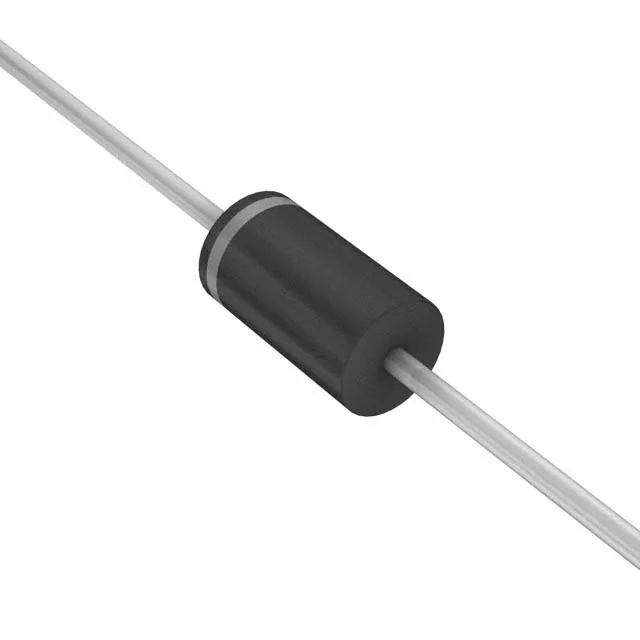
1500W automotive-grade transient suppressor
The 1.5KE33AHE3_A/C: It clamps transients at 45.7V maximum with a 28.2V reverse standoff, making it a fit for 24V nominal automotive bus protection where the steady-state rail stays below the standoff voltage.
Clamping window and pulse current
Breakdown voltage min 31.4V ensures the device starts conducting before the protected circuit's absolute maximum rating is reached. The clamping voltage at 32.8A peak pulse current is 45.7V max — this is the voltage the downstream components see during a surge event, so the 45.7V ceiling must stay below the stress rating of the powered ICs and capacitors. The 28.2V reverse standoff voltage is the maximum DC or AC peak the diode blocks without conducting leakage current. For a 24V battery system with a 28V alternator regulation ceiling, this standoff provides margin — the diode stays off during normal operation and only clamps when the bus exceeds 31.4V.
Package and board integration
The DO-201AA (DO-27) axial-lead through-hole package is the standard footprint for board-level TVS diodes rated at this power level. The axial body allows hand-insertion or wave-solder assembly; the lead spacing matches common PCB hole patterns for 1.5kW-class transient suppressors. Operating temperature covers -55°C to 175°C, which aligns with the AEC-Q101 Grade 0 range. The junction temperature rating is the same as the ambient range — no derating needed for ambient up to 175°C, though the 1500W peak pulse rating assumes the device starts at 25°C; repetitive pulsing requires thermal derating per the datasheet curve.
Sourcing and compliance
The AEC-Q101 qualification package includes PPAP documentation and RoHS compliance data from Vishay.