1500 W peak pulse — the rating that defines the protection envelope
The 1.5KE30CA-E3/73: That 1.5 kW rating is the energy the device can safely absorb in a single transient — it sets the upper limit of the surge the protected circuit can survive. The clamping voltage at that peak pulse current is 41.4 V max, meaning a 25.6 V nominal rail sees the spike clipped to that ceiling before the TVS conducts the 36.2 A pulse to ground.
A single bidirectional channel covers transients of either polarity, so a single device protects an AC signal line or a bipolar DC rail without needing two back-to-back unidirectional parts. The breakdown voltage starts at 28.5 V minimum, with a reverse standoff of 25.6 V typical — the rail should stay below that standoff to avoid leakage in normal operation.
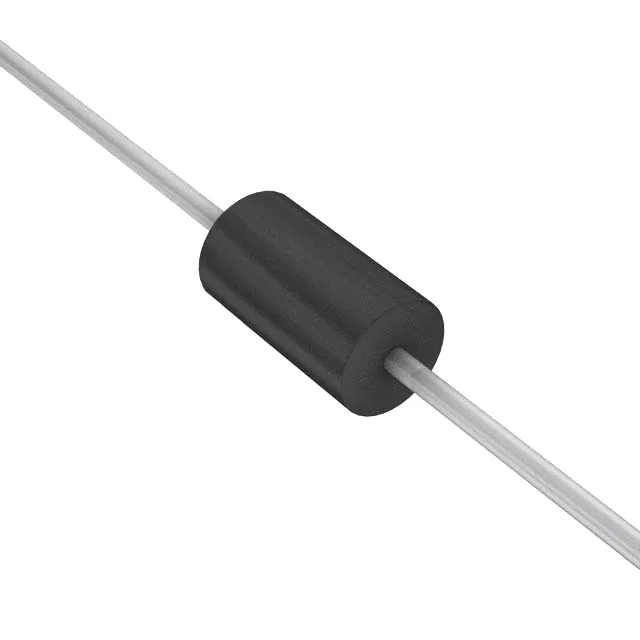
Through-hole axial — legacy footprint, high-reliant mounting
The DO-201AA / DO-27 axial-lead package is a through-hole form factor that has been a workhorse in industrial and telecom boards for decades. The leads are soldered into plated through-holes, giving a mechanically robust joint that handles thermal cycling better than a small surface-mount package. The 1.5KE series supplier device package designation (1.5KE) is shared across the family, so the PCB footprint is consistent across voltage variants within the series.
General-purpose application — not limited to a single market
Vishay lists the application as general purpose, meaning the TVS is suited for protecting DC power rails, signal lines, and low-voltage AC circuits in industrial controls, telecom equipment, automotive electronics, and consumer goods. Power line protection is explicitly not supported — do not use this part on mains AC (120/230 V) lines; it is designed for the low-voltage side of the system.