1500 W peak pulse — what it means for rail protection
The 1.5KE30A-E3/54: The 25.6 V reverse standoff sets the maximum DC rail voltage it can protect — a 24 V nominal bus with 10 % tolerance sits safely below this threshold. Clamping at 41.4 V limits the surge voltage seen by downstream components. Breakdown voltage starts at 28.5 V min, ensuring the device triggers before the clamped level is reached. The 36.2 A peak pulse current tells you how much surge current the diode can sink during that 10/1000 µs event — useful for calculating the energy in a given transient scenario.
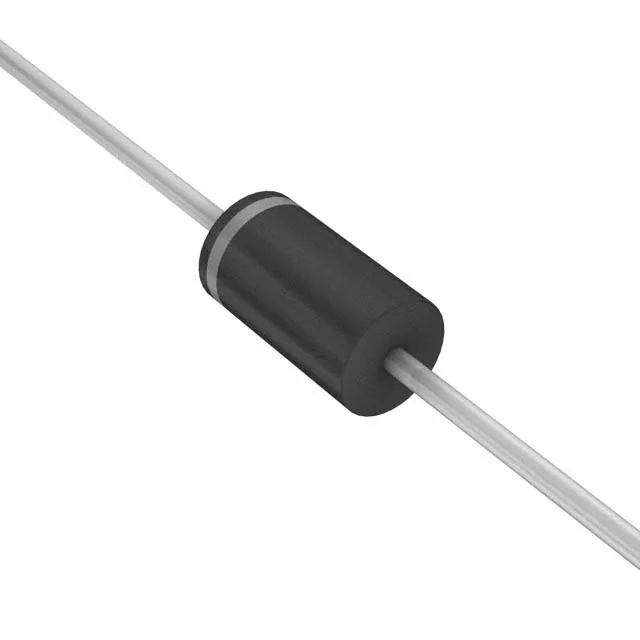
Unidirectional Zener TVS — DO-201AA axial package
This is a unidirectional Zener-type TVS, meaning it clamps only one polarity — the cathode band marks the protected side. For AC lines or bipolar transients, a bidirectional variant would be required. The DO-201AA / DO-27 axial package is a through-hole footprint common in power supplies, industrial controls, and telecom line cards. It mounts into a standard 0.040-inch hole pattern and is often used on terminal strips or PCB edge protection zones. The wide junction temperature range means derating is minimal across typical ambient conditions — the 1500 W rating holds at 25°C and derates linearly above that.