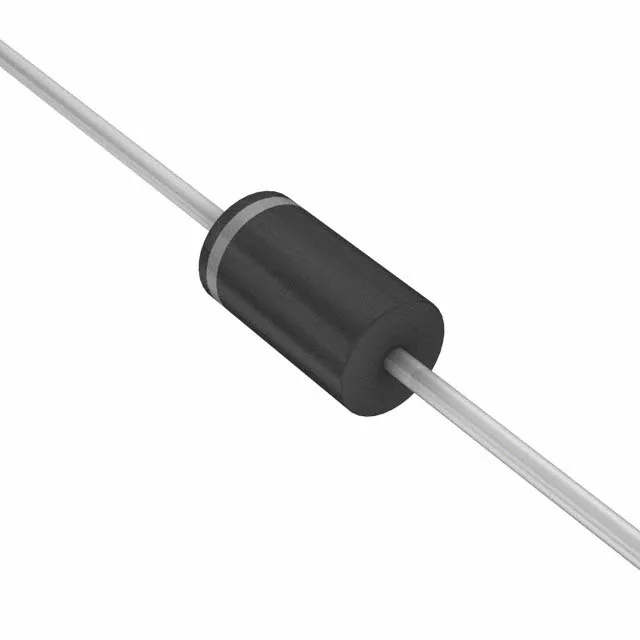
Vishay General Semiconductor - Diodes Division 1.5KE27CAHE3_B/C — Circuit Protection

Vishay 1.5KE27CAHE3_B/C TransZorb TVS, 1500W, 23.1V Standoff

MPN1.5KE27CAHE3_B/C
Active

Vishay General Semiconductor - Diodes Division TransZorb® series, TVS Zener, bidirectional, 1.5KE27CAHE3_B/C, DO-201AA / DO-27 axial, 1500W peak pulse, 23.1V standoff, AEC-Q101 automotive grade.

Sourced new & surplus through independent channelsAuthenticity-screened · ESD-safe packingListing updated Aug 2026

Specifications

1.5KE27CAHE3_B/C specifications
ParameterValue
TypeZener
SeriesTransZorb®
MountingThrough Hole
Voltage - breakdown25.7V
Voltage - clamping (Max) @ ipp37.5V
Voltage - reverse standoff23.1V
Current - peak pulse (10/1000μs)42A
Power - peak pulse1500W (1.5kW)
Power line protectionNo
Operating temperature-55°C ~ 175°C (TJ)
GradeAutomotive
PackageTape & Reel (TR)
ApplicationsTelecom
QualificationAEC-Q101
CaseDO-201AA, DO-27, Axial
Bidirectional channels1

Product details

1500 W bidirectional TVS for 24 V automotive and telecom rails

The 1.5KE27CAHE3_B/C: Its 23.1 V reverse standoff voltage and 25.7 V minimum breakdown make it a fit for protecting 24 V nominal rails — the clamping voltage peaks at 37.5 V at the 42 A peak pulse current, keeping transients off downstream silicon.

Through-hole axial package and board integration

Housed in a DO-201AA (DO-27) axial-lead package, the 1.5KE27CAHE3_B/C mounts through-hole — the body is the 1.5KE standard footprint shared across the TransZorb family. The axial leads suit point-to-point wiring on terminal strips or PCB through-holes; the package handles the thermal pulse of a 1500 W surge without external heatsinking, relying on the lead-to-copper junction for heat extraction.

Frequently asked questions

Where can I buy 1.5KE27CAHE3_B/C and how do I get a price?

The 1.5KE27CAHE3_B/C is sourced to order against an RFQ.

What is 1.5KE27CAHE3_B/C's listed type and grade?

The device type is Zener — a bidirectional TVS diode that clamps transients via the Zener avalanche effect. The grade is Automotive, backed by AEC-Q101 qualification, meaning it meets the reliability and temperature screening requirements for automotive electronic systems.