Transient protection for 24V rails
The 1.5KE24CA-E3/73: The Vishay 1.5KE24CA-/73 is a bidirectional TransZorb TVS diode designed to clamp transients on 24V nominal DC or AC lines. With a 20.5V reverse standoff voltage, it stays out of the way during normal operation, then clamps at 33.2V when a surge hits — shunting up to 45.2A of peak pulse current (10/1000µs waveform) and absorbing 1500W of peak pulse power. The bidirectional configuration means a single device protects against both positive and negative transients, which simplifies board layout on AC-coupled or bipolar supply lines where polarity isn't fixed.
Package and board-fit
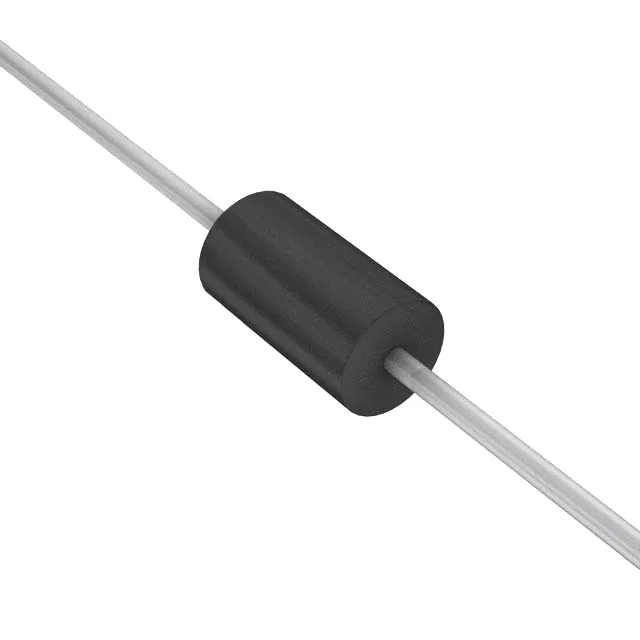
Housed in a DO-201AA (DO-27) axial-lead through-hole package, this TVS is built to handle the thermal and mechanical stress of high-energy surges. The leaded format suits wave-solder or manual assembly and allows the device to be mounted with its body off the board for better convection cooling — useful when repetitive surges drive junction temperature up. The operating junction temperature range spans -55°C to 175°C, covering industrial enclosures, automotive under-hood environments, and outdoor telecom cabinets where ambient heat combines with self-heating from surge events.
Sourced through independent distribution channels.