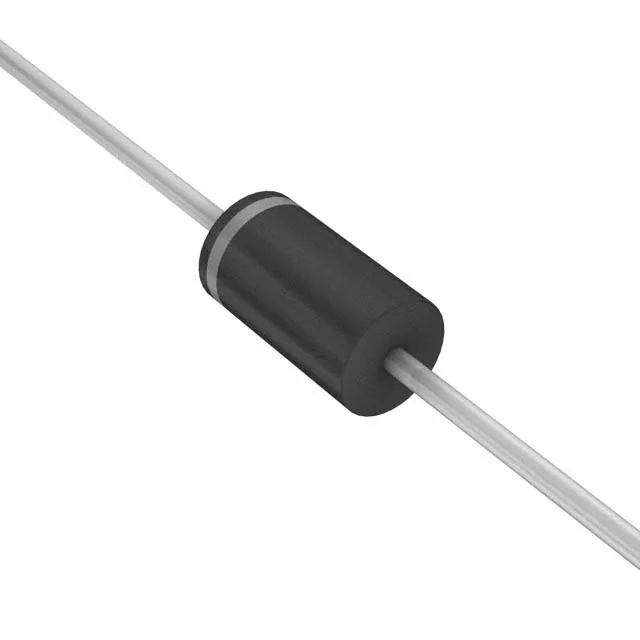
Part identity and what it does on the board
The 1.5KE22CHE3/54: It clamps transient overvoltages on a 17.8V nominal rail — the reverse standoff voltage — by breaking down at 19.8V minimum and clamping the surge to 31.9V maximum while conducting up to 47A of peak pulse current (10/1000 µs waveform). The single bidirectional channel protects one line against both positive and negative transients, so no polarity orientation is needed during assembly.
Lifecycle reality — obsolete, sourced through surplus channels
Vishay lists the 1.5KE22CHE3/54 as obsolete. Sourcing is through independent surplus and broker channels; each lot is verified for authenticity and traceability before shipment. The DO-201AA axial footprint is standard, so a replacement from the same family with the same standoff voltage fits without a board spin.
Temperature range and deployment environment
The operating junction temperature range spans -55°C to 175°C, covering the full automotive under-hood and engine-bay thermal profile. The AEC-Q101 Grade 0 equivalent qualification (175°C rated) means the part survives the high ambient temperatures near exhaust manifolds and turbochargers without derating the peak pulse power. Through-hole mounting in the DO-201AA package (also known as DO-27) gives a low thermal resistance path from the junction to the PCB copper — the axial leads conduct heat into the board traces, which matters when the TVS must absorb repetitive pulses, not just a single fault event.