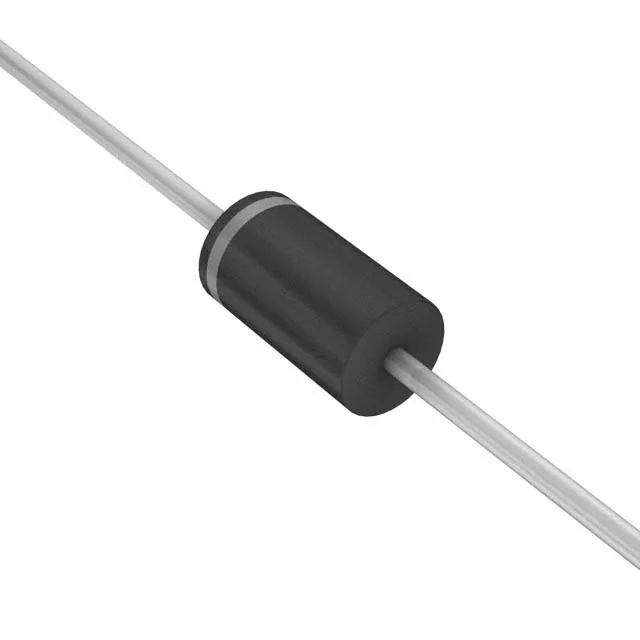
Vishay General Semiconductor - Diodes Division 1.5KE220CAHE3_A/D — Circuit Protection

Vishay 1.5KE220CAHE3_A/D TVS, 1500W, 185V Standoff, DO-201AA

MPN1.5KE220CAHE3_A/D
Active

Vishay General Semiconductor - Diodes Division, TransZorb® Automotive Series, bidirectional TVS diode, 1.5KE220CAHE3_A/D, 1500W peak pulse power, 185V standoff, DO-201AA axial through-hole.

Independent supplier — new & surplus stockAuthenticity-screened · ESD-safe packingListing updated Aug 2026

Specifications

1.5KE220CAHE3_A/D specifications
ParameterValue
TypeZener
SeriesAutomotive, AEC-Q101, TransZorb®
MountingThrough Hole
Voltage - breakdown209V
Voltage - clamping (Max) @ ipp328V
Voltage - reverse standoff185V
Current - peak pulse (10/1000μs)4.6A
Power - peak pulse1500W (1.5kW)
Power line protectionNo
Operating temperature-55°C~175°C(TJ)
PackageTape & Box (TB)
ApplicationsAutomotive
CaseDO-201AA, DO-27, Axial
Bidirectional channels1

Product details

1500W peak pulse — sizing the protection for a 185V rail

The 1.5KE220CAHE3_A/D: The 185 V reverse standoff voltage sits below the 209 V minimum breakdown — the device stays transparent on a nominal 185 V DC bus and only conducts when the transient pushes above the breakdown knee. That makes it a fit for under-hood or chassis-mounted ECU power inputs where load-dump, alternator surge, and inductive kickback are the daily threat.

Bidirectional, single-die — one part covers both polarities

A single bidirectional channel protects against positive and negative transients without needing two series diodes. The DO-201AA axial package is a through-hole leaded form — it handles the thermal cycling of power-stage clamping better than a surface-mount equivalent in the same power class.

Frequently asked questions

What does AEC-Q101 qualification mean for this TVS?

AEC-Q101 certifies the device for automotive stress grades: extended temperature range, high-temperature reverse bias reliability, and lot-level traceability. It is suitable for 12V and 24V vehicle electrical systems where load-dump and surge pulses are expected.