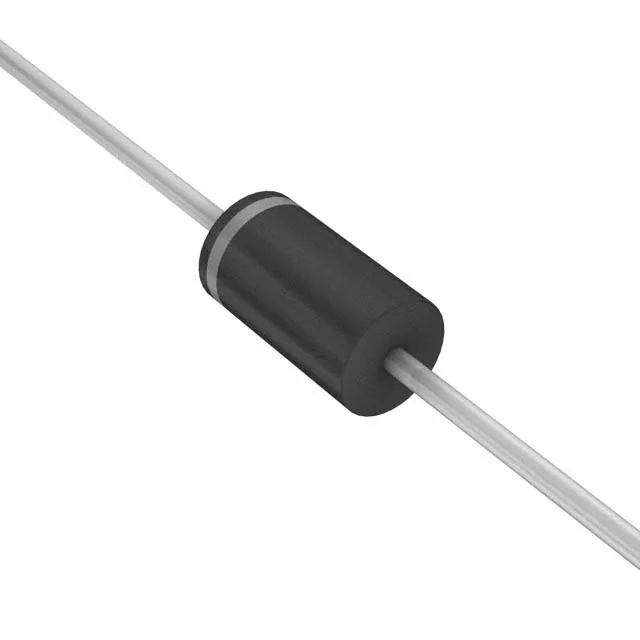
Automotive TVS in an axial DO-201AA package
The 1.5KE200HE3/54: It clamps at 287 V maximum, with a breakdown voltage of 180 V minimum and a 162 V reverse standoff — meaning a 162 V rail sees no leakage until the transient pushes past the breakdown threshold, at which point the device shunts up to 5.2 A peak pulse current to ground.
The 1.5KE200HE3/54 is a unidirectional device with a single protection channel. Power line protection is not supported — it is designed for signal or DC rail clamping, not AC mains.
Obsolete — sourcing through independent channels
Vishay has marked this part obsolete. That means new designs should migrate to an active Vishay TransZorb or an alternative AEC-Q101 TVS in the same DO-201AA package — a parametric search for a 162 V standoff, 1.5 kW, unidirectional device will yield candidates. For existing BOM lines, the 1.5KE200HE3/54 is available through independent surplus and broker channels. Quantity, date code, and pricing are confirmed at RFQ. The axial DO-201AA package is common enough that a stock check across multiple sources usually turns up lots — but the window tightens as the EOL date recedes.