Active AEC-Q101 TVS for DC-Rail Transient Protection
The 1.5KE200AHE3_A/C: Its 171 V reverse standoff voltage and 190 V minimum breakdown voltage place it squarely on 150–170 VDC rails — common in automotive 48 V mild-hybrid bus bars, EV DC-link snubbers, and industrial 170 VDC power supplies where a single unidirectional channel clamps positive transients to ground.
Clamping Voltage and Pulse Current — What the Ratings Mean for the Board
At 5.5 A peak pulse current the voltage is forced to 274 V maximum — this is the voltage the protected IC sees across its supply pins during the transient. A downstream DC-DC converter with a 250 V abs-max input would be stressed beyond its rating; the designer must ensure the converter's avalanche rating or an upstream filter absorbs the residual. No power-line protection flag means this device is not rated for mains AC transient suppression per IEC 61643-11 — it is a DC-rail TVS, not a varistor or MOV replacement for 230 VAC inputs.
Package and Assembly — Through-Hole DO-201AA in a Surface-Mount World
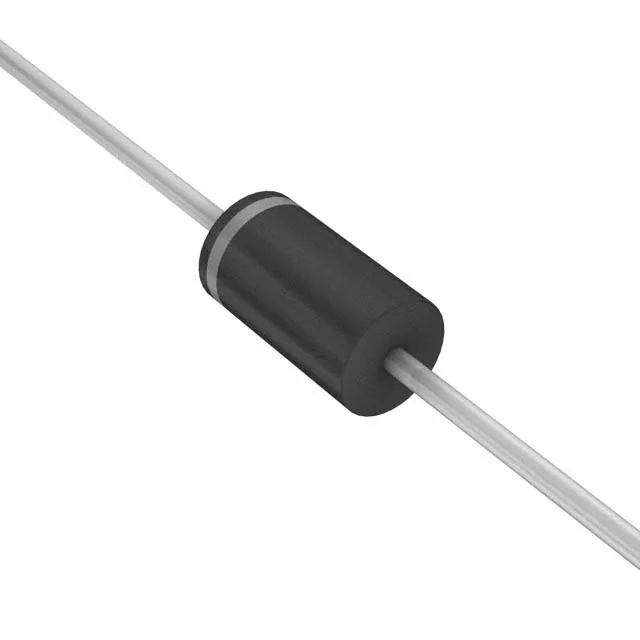
The DO-201AA (DO-27) axial-lead package with through-hole mounting suits wave-solder or hand-solder assembly. The 0.042-inch lead diameter fits standard 1.0 mm PCB holes; the body length of about 7.6 mm and lead spacing of 8.9 mm require a through-hole footprint with adequate annular ring for thermal relief. Operating junction temperature from -55 °C to 175 °C covers engine-bay ambient and exhaust-adjacent locations where standard 150 °C TVS would derate. The AEC-Q101 qualification adds stress-tested reliability screening (H3TRB, temperature cycling, ESD) required for PPAP submission in automotive Tier-1 programs.