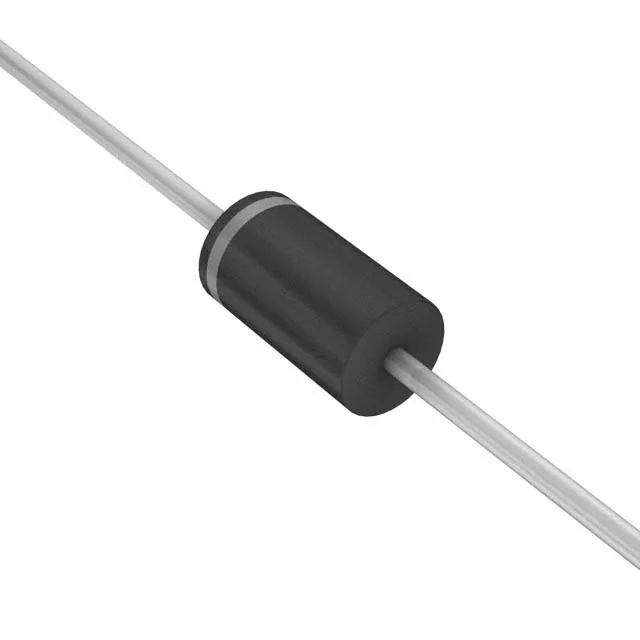
Automotive-grade transient suppressor for 154V rails
The 1.5KE180CAHE3_A/C: The 154V standoff means this part protects 150V-class DC buses or 110VAC rectified lines without conducting under normal operation. The 171V minimum breakdown guarantees the avalanche region starts above the rail tolerance, so the diode stays off until a real surge arrives.
DO-201AA axial package and board integration
Housed in a DO-201AA (DO-27) axial leaded package, this TVS is a through-hole component intended for point-to-point wiring or PCB mounting with 0.040-inch diameter leads. The axial body allows it to sit inline with a bus bar or be inserted through a board and soldered on the opposite side — common in automotive power distribution junction boxes and ECU input protection stages. At 175°C the leakage current rises, but the die still clamps within the 246V ceiling — the derating curve in the datasheet governs pulse power above 25°C.
Active lifecycle and sourcing posture
As an AEC-Q101 qualified part, it comes with the full PPAP and change notification traceability that automotive Tier-1 buyers require. The laser etch on the body carries a date-code and lot trace; we screen for marking consistency and package integrity before shipment.
Application boundary — not for AC power line primary protection
This part is explicitly listed as having no power line protection capability — it is a secondary transient suppressor for DC rails and signal lines, not a primary mains surge protector. Use it downstream of a fuse or PTC on 154V DC buses, 110VAC rectified supplies, or automotive 24V/48V systems where the standing voltage is below the standoff rating. The bidirectional configuration means it clamps both polarities with a single device — useful on AC-coupled data lines or where the supply can be reverse-connected without damage.