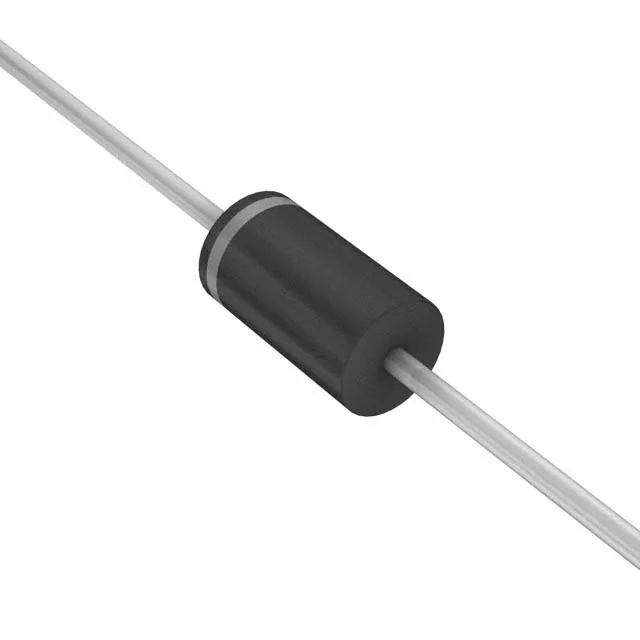
Clamping voltage and the protection margin it sets
The 1.5KE170C-E3/73: The 244 V maximum clamping voltage at 6.1 A peak pulse current defines the upper voltage any parallel load sees during a surge. A downstream DC-DC converter with a 250 V absolute-max input sits inside the margin; one rated 200 V does not. Breakdown occurs between 153 V minimum and the clamping threshold — the device starts conducting well before the rail reaches destructive levels, shunting the surge current through the junction rather than the load. The bidirectional configuration (single die, back-to-back Zener) means the same part clamps positive and negative transients equally — one order code covers both polarities on a bipolar signal line or an AC-coupled bus.
Obsolete — sourcing reality for this Vishay TransZorb
Vishay lists the 1.5KE170C-/73 as obsolete. No official successor order code is recorded from the manufacturer. The DO-201AA (DO-27) axial-lead package is a standard footprint — a replacement from the same 1.5KE family with matching standoff and bidirectional polarity fits the same board holes, but each candidate must be verified against the original clamping spec.